No. Botswana doesn't set an age limit on imported used cars. The Botswana Unified Revenue Service (BURS) is the body that handles customs, and it puts it this way on its Clearance of Motor Vehicles page: "Currently, Botswana does not impose any restriction on importation or exportation of motor vehicles."
The rest of this guide covers the 14-day clearance deadline, the paperwork BURS lists, and how to judge an older car.
Quick Answer
- BURS states that Botswana "does not impose any restriction on importation or exportation of motor vehicles". No age cut-off appears on its page.
- A car entering for home consumption must be cleared with BURS within 14 days of entry. That's a deadline, not an age limit.
- BURS lists four documents, starting with the SAD 500 customs declaration.
- "No limit" doesn't mean "buy anything". Condition matters more than the year.
What does BURS actually say about vehicle age?
BURS's page on clearing motor vehicles names no age cut-off at all. The opening sentence is a general statement about importation, and nothing further down narrows it by model year. So if you've been told a car is "too old to bring in", the official customs page doesn't support that.
"Currently, Botswana does not impose any restriction on importation or exportation of motor vehicles." (BURS, Clearance of Motor Vehicles, checked 16 November 2026)
The word "Currently" matters: policy can change, so re-check the BURS page before you commit to a purchase.
Here is what the BURS page does and doesn't cover on this topic.
| Topic |
What BURS says |
| Vehicle age |
No restriction on importation or exportation of motor vehicles |
| Clearance timing |
Within 14 days from the date of entry into Botswana |
| Document list |
Four documents, as published by BURS (listed below) |
| Registration timing and duty |
Not covered on this page, so check with the relevant authority |
Does the 14-day rule act as an age limit?
No. The 14-day rule is about timing, not eligibility. BURS says that motor vehicles entering Botswana for home consumption "should be cleared for Customs purpose within 14 days from the date of entry into Botswana". A twenty-year-old hatchback and a two-year-old SUV face exactly the same deadline.
Home consumption is customs language for a vehicle that's coming in to stay, rather than a tourist's car passing through. "Cleared for Customs purpose" means the vehicle has been declared to BURS and the customs process completed.
The practical point is simple. The clock starts when the car arrives at the border, so the paperwork needs to be ready before then.
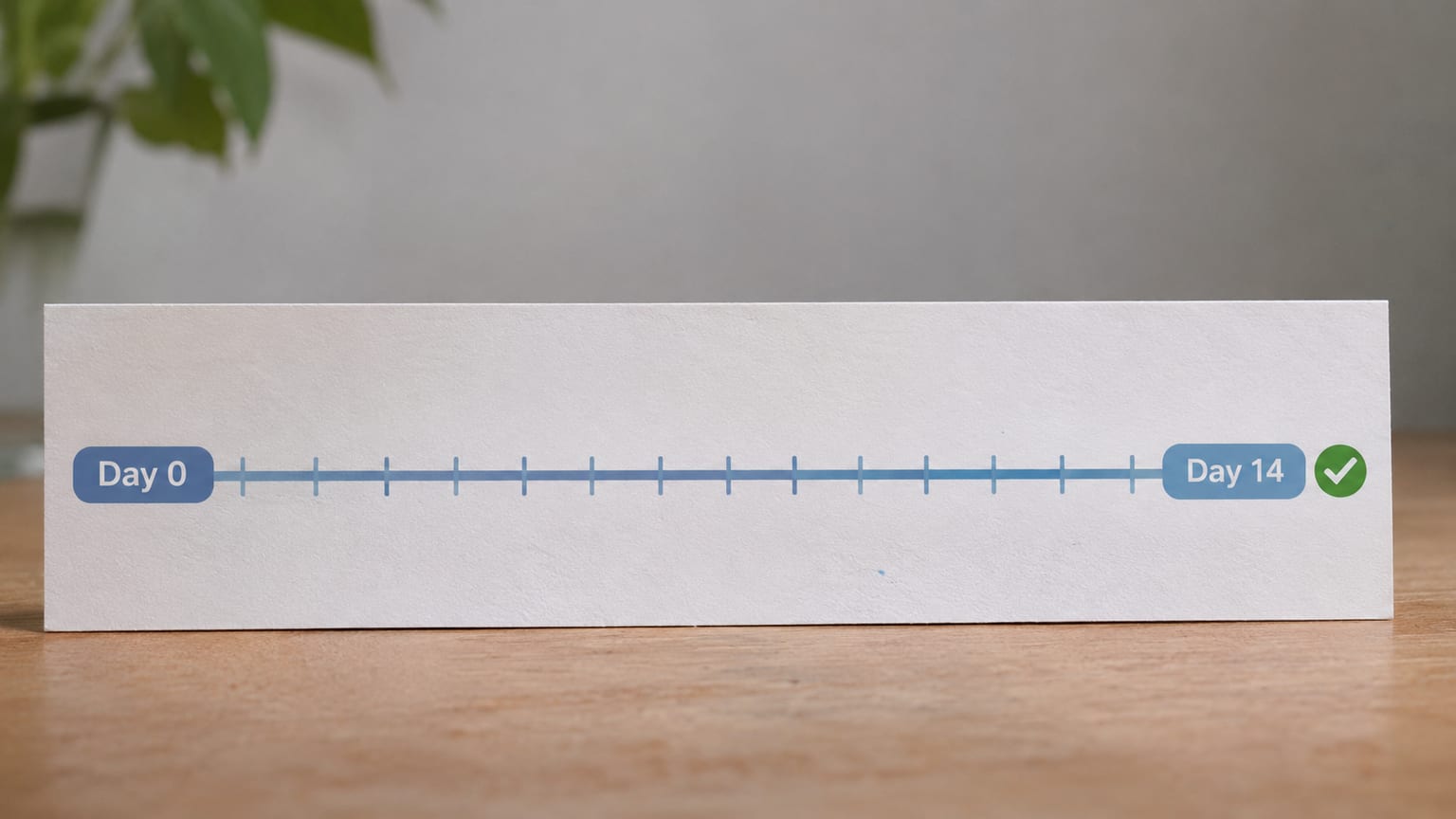 Illustration: the 14-day window runs from the date the vehicle enters Botswana.
What paperwork does BURS list?
BURS names four documents for clearing a motor vehicle. The list is short, and it applies regardless of how old the car is. Having each item ready before the vehicle reaches the border makes the 14-day window far less stressful.
- Customs Declaration Form SAD 500. SAD 500 is the customs declaration form. It records what the vehicle is and what it's worth for customs purposes.
- Police Clearance Certificate. BURS asks for one from the export country and one from the Botswana Police Service. BURS's page doesn't state the purpose of these certificates.
- Customs clearance documents from the export country. Proof that the vehicle was legally exported from where it came from.
- An invoice or valuation certificate. BURS accepts either an invoice or a valuation from a local vehicle retail store or garage.
Other websites publish longer lists, but these four are the ones BURS itself publishes.
 Illustration: Four document icons on a clipboard beside a pen.
No age limit: so how old is too old?
The honest answer is that the year on the registration document tells you less than you'd think. With no legal cut-off, the decision moves from "can I import it?" to "should I?". That comes down to condition, running costs, parts and how easily you can sell the car on later.
Age is a poor guide on its own
A well-kept twelve-year-old car with a low odometer reading and a clean service history can be a better buy than a neglected six-year-old one. Odometer reading, rust, service history and auction grade all say more about what you're getting than the model year does.
Cheaper to buy, but check wear and parts
Older cars usually cost less to buy. The trade-off is wear. Suspension bushes, brake components, cooling systems and rubber seals all age, whatever the odometer says. Before you commit, check that parts for that model are easy to find in Botswana. Check too that local mechanics know it well.
A worked example helps. Our guide on what to check on a used Toyota HiAce before you buy walks through the wear points on an older, hard-working vehicle. If your budget pushes you towards older stock, the affordable Japanese hybrids guide shows where lower purchase cost and sensible fuel use overlap.
Read the auction sheet and the inspection report
An auction sheet is the standardised condition report produced when a car passes through a Japanese auction house. It carries an auction grade, which is the inspector's overall rating of the car, usually alongside separate interior and exterior grades and a diagram marking dents, scratches and repairs.
Two cautions. Grading isn't identical across every auction house, so compare the remarks and the diagram rather than the headline number alone. And quote a grade only as it's printed on that car's sheet. The seller's inspection report adds a current set of eyes, especially on an older vehicle where small faults add up.
Resale and who this isn't for
Resale value is worth weighing before you buy an older car, because it is hard to predict. Two checks help. First, see how common the model is in Botswana, since a familiar model is usually easier to sell on. Second, see how easy parts are to get, because buyers worry about that too.
An older import is not the right fit for a buyer who wants no surprises. If you'd rather not budget for a few repairs in the first year, look newer. If you're comfortable reading reports closely and have a trusted mechanic, an older car at a lower price makes a lot of sense. For the wider decision, see our petrol vs diesel vs hybrid comparison for Botswana and the general guide to finding vehicles for sale in Botswana.
Browsing older and newer Japanese cars on Carbarn
Carbarn is run by Carbarn LLC, a Japanese exporter operating from Japan. Each listing comes with the official auction sheet and an in-house Carbarn inspection report, both available before you pay.
Because Botswana sets no age limit, you can compare older and newer stock side by side on the Carbarn Botswana cars page and filter by year, odometer and auction grade. The how to buy guide sets out the buying steps, and the Carbarn FAQ confirms there are no official age restrictions on imported vehicles in Botswana.