


If you want lower fuel costs, the smallest hybrid can look like the obvious answer. But an Aqua may feel cramped when five adults, luggage and Botswana’s long roads become part of the routine.
The right choice depends on how you drive. Gaborone commuting, school runs, Francistown trips, Maun roads and regular inter-town journeys place different demands on a car. The advertised vehicle price is only one part of the decision.
Botswana’s lack of a general vehicle import restriction also opens the door to older, lower-cost Japanese hybrids. However, age should never be the only test. Battery evidence, auction history, odometer consistency, tyres, underbody condition and parts support matter just as much.
This guide compares seven Japanese hybrids by buyer fit rather than headline fuel economy alone. For broader vehicle research, see the Toyota hybrid specifications. If you are comparing affordable hybrid cars in Botswana, start with the full landed-cost estimate rather than the vehicle price alone.
Quick Answer
- The Toyota Aqua is a practical starting point for mainly urban driving and a lower purchase band in the examples reviewed.
- The Corolla Axio Hybrid and Fielder make more sense when boot space and family practicality matter.
- The Honda Fit Hybrid offers a flexible non-Toyota alternative, but its generation and hybrid system need checking.
- The Corolla Hybrid suits regular inter-town travel, while the Prius and Yaris Cross are conditional choices that need a vehicle-specific cost comparison.
- Selected current Aqua grades publish strong results under Japan’s WLTC test cycle; confirm the exact figure for the grade being compared (Toyota Japan, Aqua specifications, 2025).
What makes a hybrid affordable in Botswana?
In 2026, BURS says vehicles entering Botswana for home consumption should be cleared within 14 days of entry. That means affordability includes customs, documents, clearing, registration and future maintenance, not just the vehicle price (BURS, Clearance of Motor Vehicles, 2026).
A vehicle-and-shipping quote is different from the final on-road cost. Customs assessment, duties and taxes where applicable, clearing, registration, licensing, bank charges and exchange-rate movement can remain separate. Ask for a vehicle-specific estimate before comparing one model against another.
Older Japanese hybrids can offer a lower entry point because Botswana has no general age restriction on imported motor vehicles. That expands the shortlist, but it also makes condition checks more important. A well-documented older car can make sense, while a poorly documented newer car may not.
Conventional hybrids such as the Aqua, non-plug-in Fit Hybrid, conventional Prius and Corolla Hybrid do not need an external charging point. They recharge through regenerative braking and the vehicle’s petrol-electric system. Prius plug-in variants, including Prime models, are different because their value depends partly on access to suitable charging.
The smallest hybrid is not always the cheapest car to own. If an Aqua leaves you short of luggage space, moving up to an Axio or Fielder may prevent an expensive replacement later.
Which Japanese hybrid models deserve comparison?
Published 2025 Toyota figures in this comparison range from 27.8km/L to 34.6km/L under WLTC, but the catalogues cover different generations, grades and body styles. The most useful comparison therefore combines efficiency with space, comfort, affordability and service familiarity (Toyota Japan, Aqua and Corolla specifications, 2025).
| Model | Body style | Strongest use case | Space | Inter-town suitability | Affordability position |
|---|---|---|---|---|---|
| Toyota Aqua | Compact hatchback | Gaborone commuting | Limited to moderate | Acceptable when lightly loaded | Strongest starting point |
| Toyota Corolla Axio Hybrid | Compact sedan | Sedan boot and family use | Moderate | Good | Higher than the Aqua in the examples reviewed |
| Toyota Corolla Fielder Hybrid | Wagon | Family luggage and equipment | Strong | Very good | Depends heavily on condition and the example reviewed |
| Honda Fit Hybrid | Compact hatchback | Flexible small-car alternative | Moderate | Acceptable | Worth comparing with the Aqua |
| Toyota Corolla Hybrid | Larger hatchback or sedan variant | Comfort and longer trips | Strong | Very good | Higher budget |
| Toyota Prius | Larger efficiency-focused hatchback | Efficiency with more space | Strong | Good | Conditional value |
| Toyota Yaris Cross Hybrid | Compact crossover | Higher seating position | Moderate to strong | Good | Often higher-priced in the examples reviewed |
The buyer-fit scores below are editorial guidance, not survey results or ownership guarantees. They use five Botswana-specific criteria: entry affordability, city use, space, inter-town comfort and service familiarity. “Entry affordability” ranks the reviewed vehicle examples by their quoted vehicle-and-shipping bands before Botswana duty, clearance, registration and licensing. It is a relative comparison, not a fixed market price or a promise of final landed cost.
| Model | Entry affordability | City use | Space | Inter-town comfort | Service familiarity |
|---|---|---|---|---|---|
| Toyota Aqua | 5/5 | 5/5 | 2/5 | 3/5 | 5/5 |
| Corolla Axio Hybrid | 4/5 | 4/5 | 4/5 | 4/5 | 5/5 |
| Corolla Fielder Hybrid | 3/5 | 4/5 | 5/5 | 5/5 | 5/5 |
| Honda Fit Hybrid | 4/5 | 4/5 | 4/5 | 3/5 | 3/5 |
| Toyota Corolla Hybrid | 2/5 | 4/5 | 5/5 | 5/5 | 5/5 |
| Toyota Prius | 3/5 | 5/5 | 5/5 | 4/5 | 4/5 |
| Toyota Yaris Cross Hybrid | 2/5 | 4/5 | 4/5 | 4/5 | 4/5 |
Is the Toyota Aqua the best affordable city hybrid?
Toyota’s Japanese specifications publish WLTC economy figures for selected current Aqua grades. The exact result depends on the grade, so confirm the model code before comparing it with another hybrid. The Aqua is a practical starting point for buyers who mainly drive around Gaborone and value compact size, easy parking and lower running-cost potential (Toyota Japan, Aqua specifications, 2025).
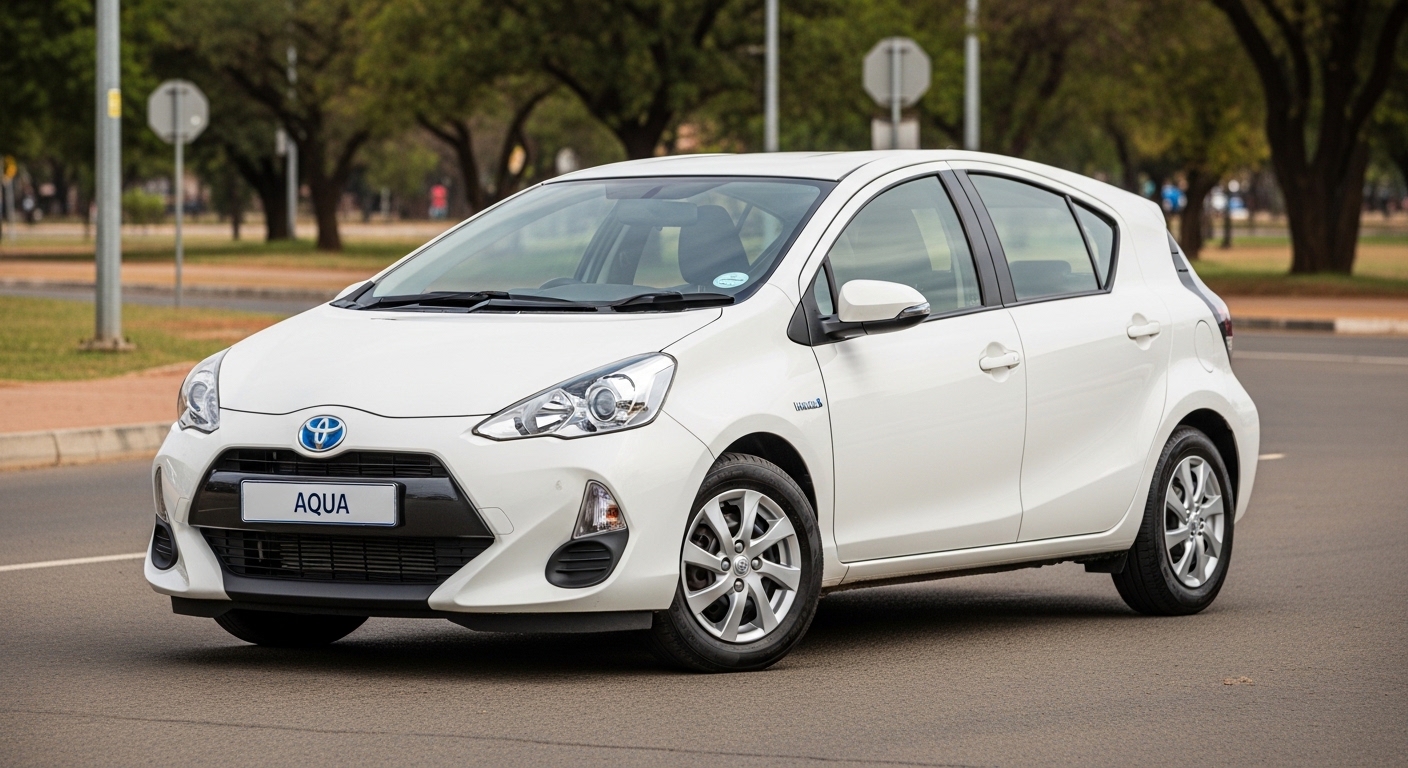 2017 Toyota Aqua
The 2017 example reviewed for this comparison uses a 1,500cc hybrid powertrain, front-wheel drive, automatic transmission and five seats. Its listed odometer is 124,000km, with auction grade 4 (2017 Toyota Aqua vehicle page, 2026). Those figures help frame the car, but they do not replace the inspection report.
The Aqua’s main compromise is space. The rear cabin and luggage area are suitable for daily use, but regular trips with five adults and luggage may feel restrictive. Before buying an older example, check the hybrid battery evidence, accident history, odometer consistency, underbody, tyres and air-conditioning performance.
Is the Toyota Corolla a compact sedan candidate?
In 2024, Toyota Japan listed 27.8km/L WLTC for a Corolla Axio Hybrid EX with a 1.5-litre engine, 74ps and 111Nm. The Axio makes more sense than the Aqua when you want a conventional boot and a calmer family-car layout (Toyota Japan, Corolla Axio Hybrid EX specifications, 2024).
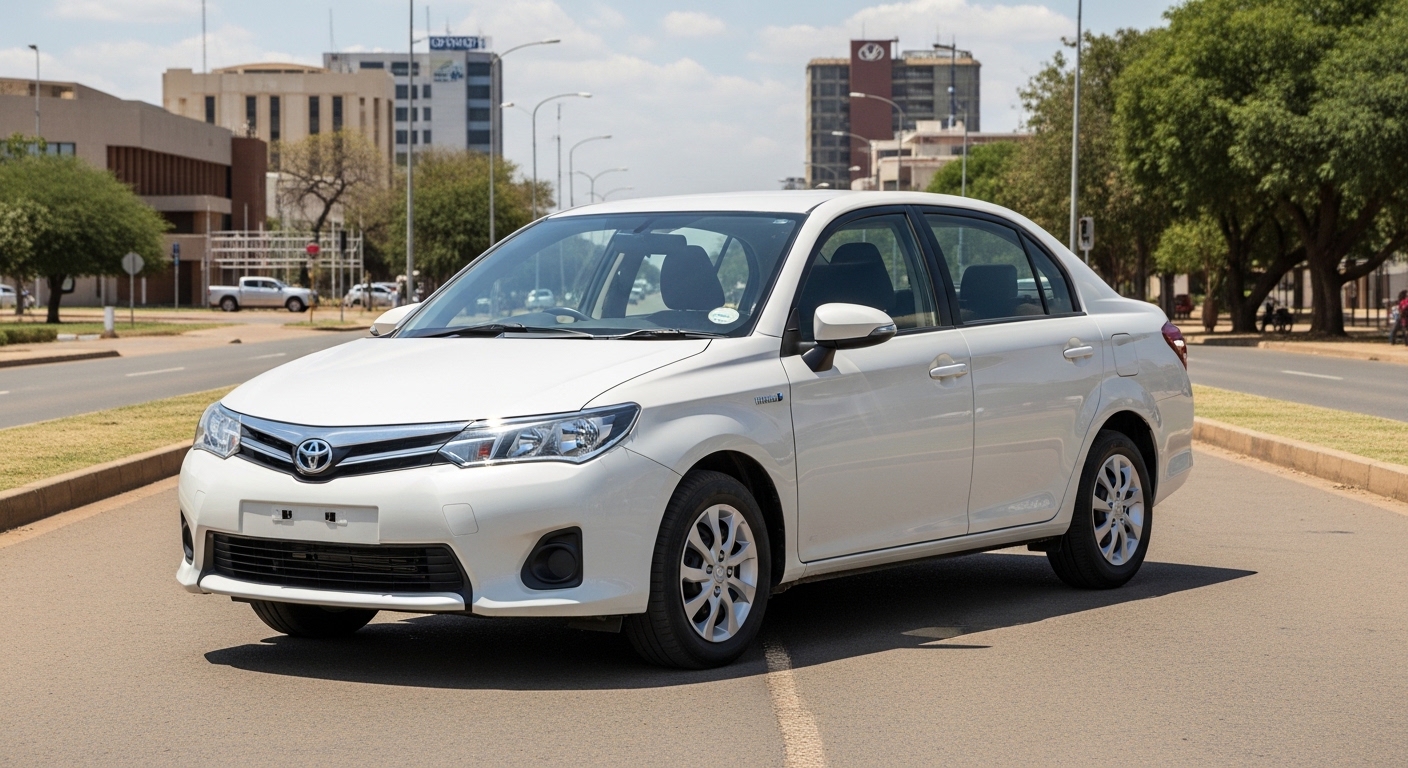 2015 Toyota Corolla example
The 2015 example supplied for this comparison is listed with a 1,500cc hybrid system, front-wheel drive, automatic transmission, five seats, 26,000km and auction grade 4.5 (2015 Toyota Corolla vehicle page, 2026). Its vehicle page describes the body as a wagon, so the exact model code and auction sheet must be confirmed before calling it an Axio or sedan.
That naming check matters because Axio and Fielder are not the same body style. A sedan gives you a separate boot, while a wagon offers greater loading flexibility. For deeper background, see the Corolla Axio Hybrid buyer guide.
Is the Toyota Corolla Fielder Hybrid the best family wagon?
Toyota’s Corolla Fielder catalogue covers multiple years and grades, so its published WLTC figure should be matched to the exact model code and year before comparing fuel economy. The Fielder is a practical choice for buyers carrying family luggage, work equipment or larger shopping loads on regular journeys (Toyota Japan, Corolla Fielder catalogue).
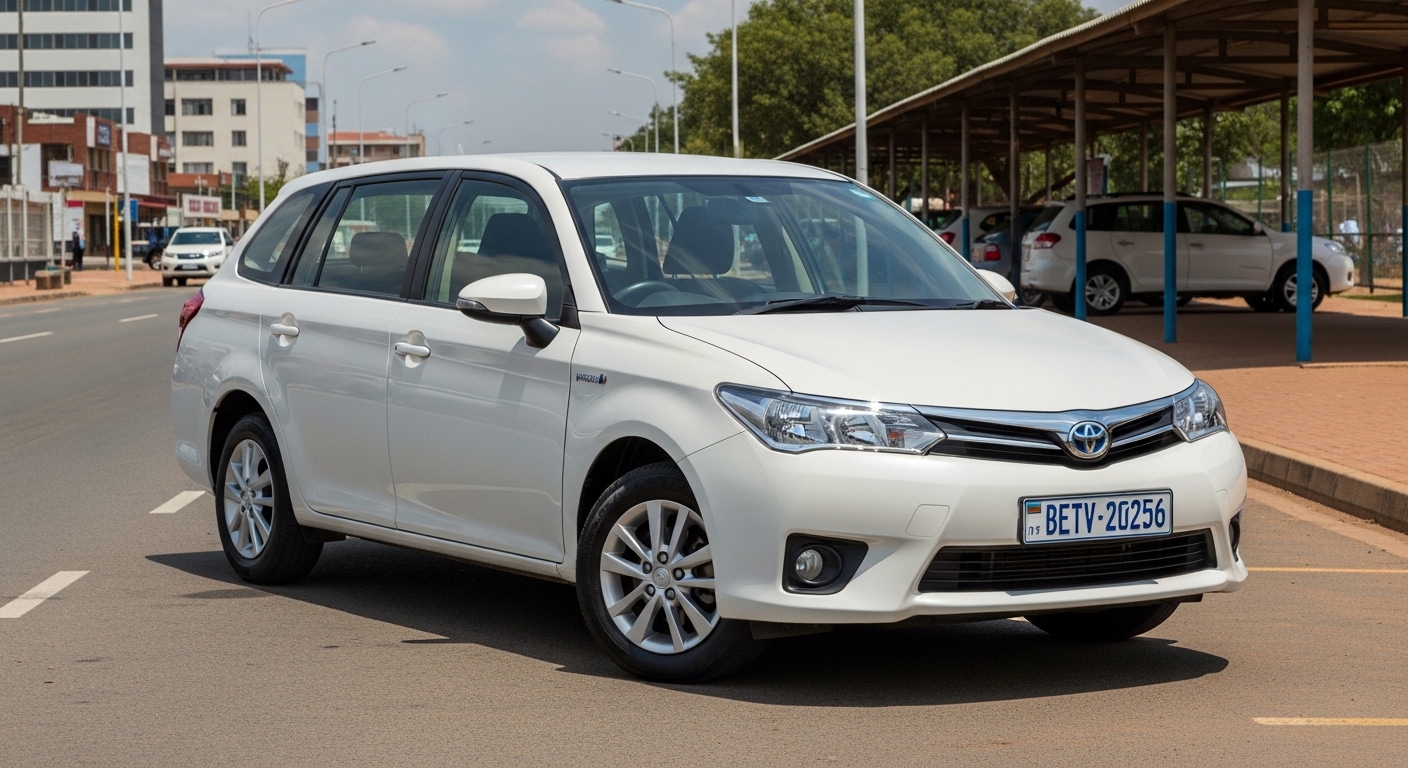 2014 Toyota Corolla wagon example
The 2014 Toyota Corolla example is listed as a 1,500cc hybrid wagon with front-wheel drive, automatic transmission, five seats, 107,000km and auction grade 4 (2014 Toyota Corolla vehicle page, 2026). The page does not clearly establish the Fielder model, so confirm the model code or auction sheet before using it as a Fielder example. The inspection information records a clean underbody and 4mm tyre tread on the example reviewed, but every vehicle needs its own report.
The Fielder’s advantage is practical value, not simply fuel economy. It can be easier to live with on Gaborone to Francistown or Maun journeys when the boot is full. The trade-off is that older wagon examples deserve close checks around battery evidence, suspension, tyres, underbody condition and service history.
Honda Fit Hybrid: best non-Toyota alternative
Honda’s current Fit specifications show that WLTC economy varies by grade, drivetrain and generation. Match any quoted figure to the exact Japanese-market model code before using it in a comparison. The Fit is worth considering for buyers who want a flexible small car, but current figures do not describe every older Japanese-market Fit Hybrid (Honda Japan, Fit specifications, 2026).
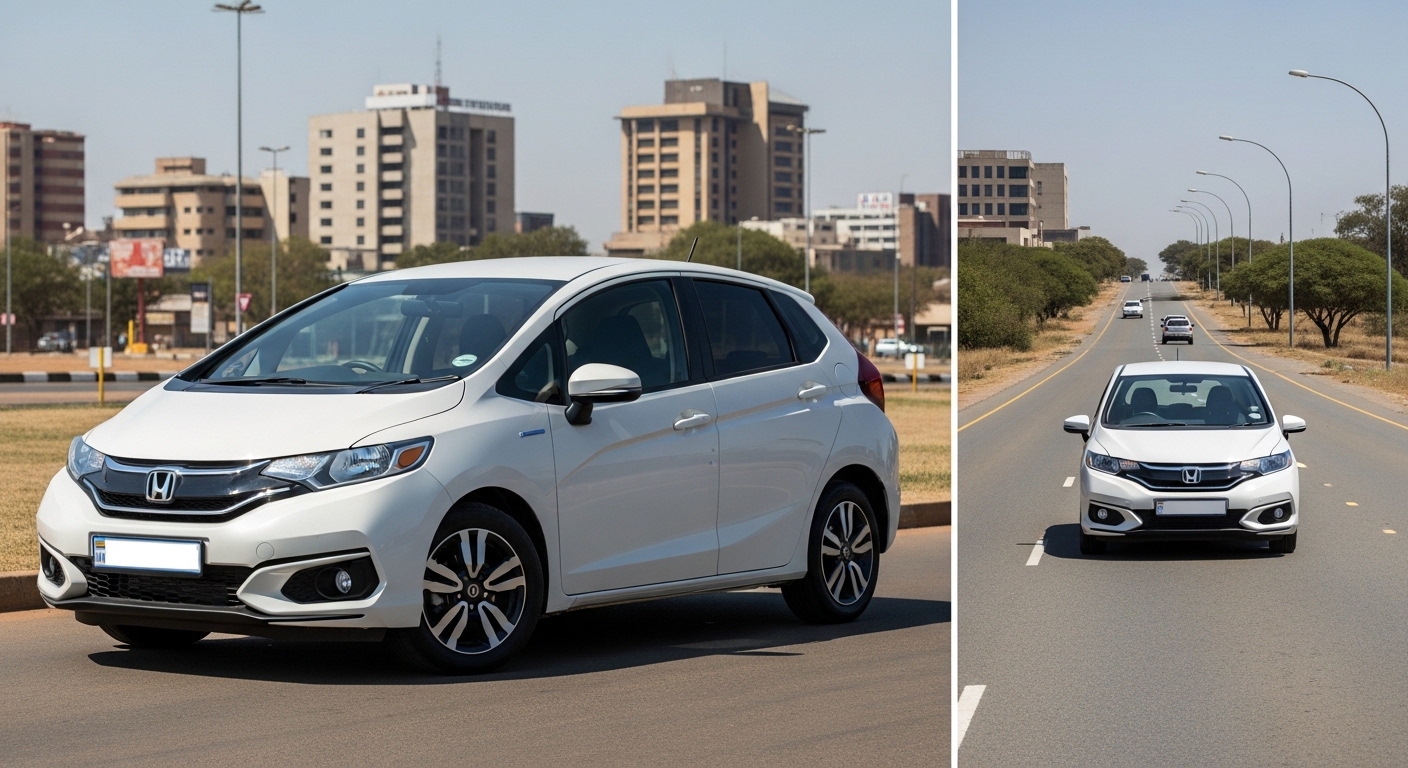 2018 Honda Fit
The 2018 example uses a 1,500cc hybrid system, front-wheel drive, automatic transmission and five seats. Its listed odometer is 109,000km and its auction grade is 3.5 (2018 Honda Fit vehicle page, 2026). The page identifies the engine code as LEB and lists 110 as its power figure, although the unit should be confirmed from the final documentation.
Honda Fit hybrids vary by generation, model code and drivetrain. Confirm the battery system, transmission, parts support and inspection comments. A lower auction grade is not an automatic rejection, but it does make careful document review more important.
Toyota Corolla Hybrid: best all-rounder for longer trips
In 2026, the reviewed 2018 Japanese-market Corolla example is listed as an 1,800cc front-wheel-drive hybrid hatchback with five seats, 94,000km and auction grade 4. It suits buyers who value cabin maturity and inter-town comfort more than the lowest entry point (2018 Toyota Corolla vehicle page, 2026).
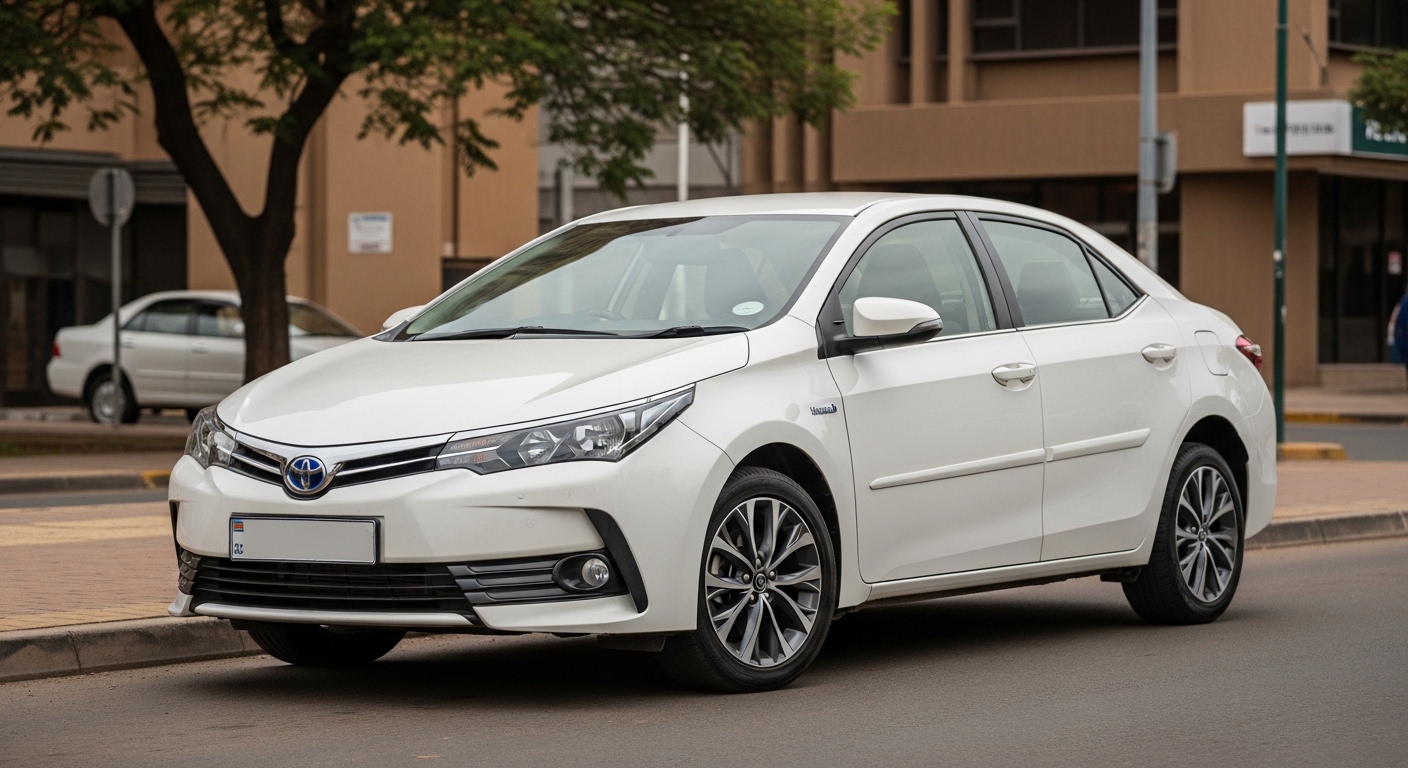 2018 Toyota Corolla
The stock page lists the engine code as 2ZR-FXE and power as 98, with automatic transmission and a 2,640mm wheelbase. The body is identified as a hatchback, so it should not be treated as identical to every Corolla sedan or Corolla Cross sold in Botswana.
A Corolla’s extra cabin space and more settled road manners can justify a higher Pula budget for regular long trips. However, compare the full landed cost against an Axio or Fielder. For broader background, read the Toyota Corolla Hybrid guide for Botswana.
Toyota Prius: efficiency-focused but conditional value
In 2025, selected Toyota Prius configurations reached up to 32.6km/L under Japan’s WLTC test cycle. The Prius remains relevant for buyers wanting more space than an Aqua, but its fuel figure does not automatically make it the cheapest overall choice (Toyota Japan, Prius catalogue, 2025).
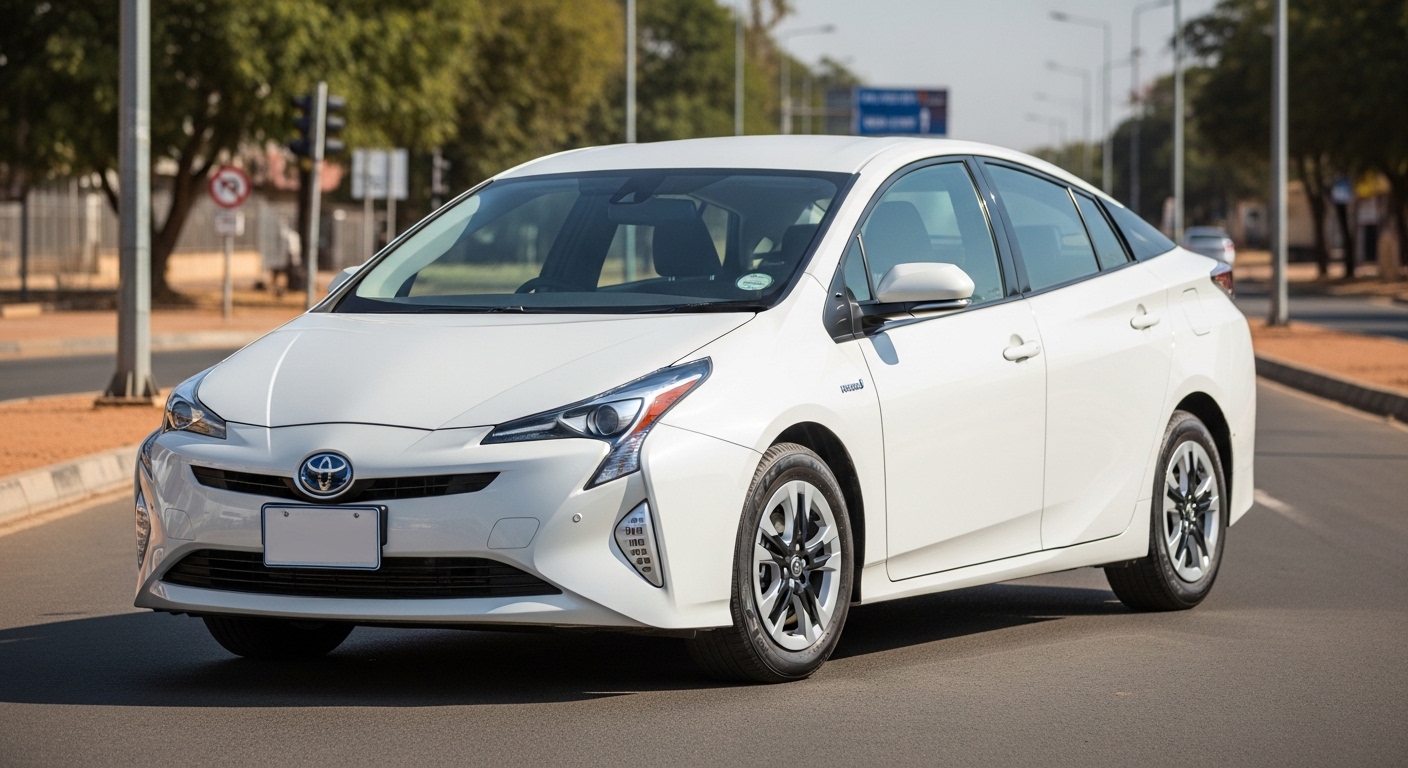 2016 Toyota Prius
The 2016 example uses an 1,800cc hybrid system, front-wheel drive, automatic transmission and five seats. Its listed odometer is 48,000km, while the auction grade is R (2016 Toyota Prius vehicle page, 2026). The grade should prompt a full review of the auction sheet because the reason for an R grade cannot be inferred from the listing alone.
The Prius can be a sensible choice when the condition, documentation and total landed cost align. Compare it against an Aqua or Corolla rather than assuming its laboratory figure guarantees lower ownership costs. Battery evidence, tyres, suspension and future service access remain part of the calculation.
Toyota Yaris Cross Hybrid: best higher-riding option
In 2025, the Toyota Yaris Cross Hybrid Z FF grade listed on the linked catalogue page reached 27.8km/L WLTC. The Yaris Cross suits buyers who want a higher seating position and compact crossover shape, but it is a conditional choice rather than a general budget leader (Toyota Japan, Yaris Cross catalogue, 2025).
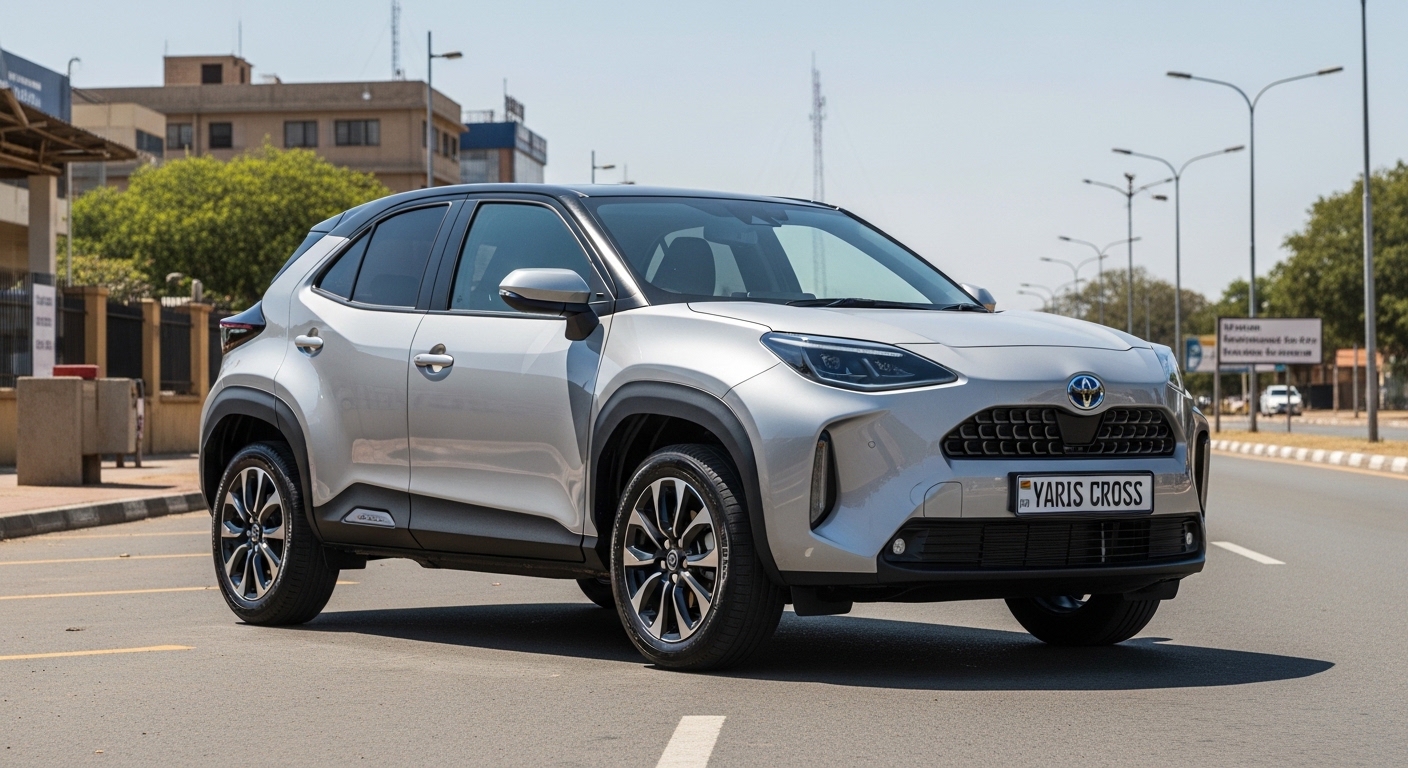 2020 Toyota Yaris Cross
The 2020 example uses a 1,500cc hybrid system, front-wheel drive, automatic transmission and five seats. The vehicle page lists 99,000km, auction grade 4, a length of 4,180mm and a height of 1,590mm (2020 Toyota Yaris Cross vehicle page, 2026).
That extra height can improve visibility and make the cabin feel more SUV-like. It does not make the car suitable for serious off-road driving. Compare its complete landed-cost estimate with an Aqua, Yaris or Corolla before paying more for the crossover format.
What should you check before buying an imported hybrid?
In 2026, the Government of Botswana states that imported vehicles must be physically presented for inspection, with imported vehicles receiving Botswana Police Form BP17B for registration clearance. The service guidance lists a 24 to 48-hour processing time after the required process is completed (Government of Botswana, Vehicle Import/Export Clearance, 2026).
Start with the auction sheet. An auction grade gives a useful condition summary, but the written notes explain repairs, dents, corrosion and interior issues. Check that the odometer, model code, drivetrain and engine size match the vehicle listing and supporting documents.
Next, read the inspection report. Look for underbody condition, tyre tread, suspension comments, dashboard warnings, air-conditioning performance and signs of accident repair. Hybrid buyers should also ask what battery evidence is available. Do not assume that age alone proves a battery is weak or strong.
What we would check first
- Older Aqua: battery evidence, odometer consistency, underbody and rear suspension.
- Axio: exact body style, model code, boot condition and service history.
- Fielder: battery evidence, tyres, underbody condition and luggage-area wear.
- Any hybrid: auction sheet, inspection report, drivetrain and final import documents.
When reviewing an older hybrid, the useful question is not simply how old it is. The stronger question is whether the auction record, inspection evidence and mechanical condition support the price being asked.
What does the import price include?
In 2026, BURS says vehicles entering Botswana for home consumption should be cleared within 14 days of entry. The authority also identifies the SAD 500, police clearance certificates, export-country customs documents and an invoice or valuation certificate among the required supporting documents (BURS, Clearance of Motor Vehicles, 2026).
The import route normally begins in Japan and moves by RoRo shipping to Durban. Walvis Bay may be available for some vehicles, but the route must be confirmed for the specific quote. The vehicle then moves overland towards Botswana before customs clearance, registration and licensing.
Keep these cost groups separate:
| Cost group | What it may include |
|---|---|
| Vehicle and export side | Vehicle, shipping, inspection and export documentation |
| Botswana import side | Customs assessment, duties and taxes where applicable |
| Clearance side | Clearing fees, border administration and required documents |
| Ownership side | Registration, licensing, insurance and first service |
| Payment side | Bank charges and exchange-rate movement |
A quoted vehicle-and-shipping figure is therefore not the final on-road cost. Use the individual vehicle’s estimated landed-cost panel as a starting point, then confirm the final assessment with BURS or a registered clearing agent. Do not rely on a universal tax percentage.
How can you compare Japanese hybrids before payment?
In 2026, BURS states that imported vehicles must be declared with supporting documents and that unaccompanied goods should be cleared through registered clearing agents. A reliable comparison therefore needs model evidence, route information and a vehicle-specific cost estimate, not only a fuel-economy headline (BURS, Customs Clearance Overview, 2026).
The vehicles are located in Japan and imported to order. Before payment, review the auction sheet, inspection report, vehicle photographs, model specifications, shipping route and estimated landed cost. This process is more useful than comparing a bare vehicle price against a local advert.
The service also provides a dashboard for invoices, inspection sheets, bill of lading documents, certificates and vessel tracking. Payment is made in full before shipment, with payment details provided through the official proforma invoice. Financing and instalments are not offered, and imported vehicles do not come with a manufacturer warranty.
In the late-stage comparison service, Carbarn’s Japan-to-Botswana import process operates internationally from Japan under Carbarn LLC and is not a legal entity in Botswana. Each listed vehicle is shown with an official Japanese auction sheet plus an in-house inspection report made available for review. The quoted all-inclusive price covers the vehicle, shipping and inspection, while customs duties and taxes, clearance, registration, licensing, bank charges and exchange-rate changes remain the purchaser’s responsibility. Each vehicle page provides an estimated landed cost in Botswana. Shipping normally moves by RoRo to Durban. Walvis Bay may be an alternative for some vehicles, subject to confirmation for the specific quote, followed by overland movement into Botswana. Buyers can review the vehicle documents and follow the buying process and Botswana import rules before ordering.
Which affordable Japanese hybrid should you choose?
Toyota’s published specifications show that WLTC results vary by model, grade and year. The right choice still depends on luggage, passengers, road use and total cost, not only the laboratory figure (Toyota Japan, model specifications, 2025).
| If you mainly… | Start with… | Main caution |
|---|---|---|
| Commute around Gaborone | Toyota Aqua | Smaller cabin and luggage area |
| Need a sedan boot | Corolla Axio Hybrid | Confirm the exact variant and body style |
| Carry family luggage or equipment | Corolla Fielder Hybrid | Check battery, tyres and underbody condition |
| Want a non-Toyota alternative | Honda Fit Hybrid | Verify the generation and hybrid system |
| Travel between towns regularly | Corolla Hybrid or Fielder | Higher purchase and landed-cost band |
| Want more space with strong efficiency | Toyota Prius | Do not confuse fuel economy with low total cost |
| Prefer a higher seating position | Yaris Cross Hybrid | Compare its full landed cost with the Aqua |
The Aqua is probably the best first model to compare for city-focused buyers. The Axio suits someone who wants a sedan boot, while the Fielder is stronger for luggage and family equipment.
The Corolla Hybrid makes more sense when regular inter-town comfort matters. The Fit deserves consideration when you want a small non-Toyota option. The Prius and Yaris Cross can work well, but only when their condition and complete landed cost justify the extra budget.