


A car that looks unbeatable on a Japanese fuel-economy chart may not suit a fully loaded family trip between Gaborone and Francistown. Road speed, air-conditioning, luggage, tyres and vehicle condition can change the result.
That’s why the most fuel-efficient Japanese car isn’t always the cheapest or most useful car to own. You also need to consider import charges, hybrid condition, servicing, resale, ground clearance and boot space.
This guide compares the Toyota Aqua, Toyota Yaris Hybrid, Corolla Axio Hybrid, Corolla Fielder Hybrid, Toyota Corolla Hybrid and Mazda Demio. It focuses on buyer needs rather than a simple kilometre-per-litre ranking. For broader background, see this updated 2026 fuel-efficiency comparison.
Quick Answer
- The Toyota Aqua is the strongest compact hybrid for mainly urban Gaborone driving.
- The Toyota Yaris Hybrid offers newer-generation efficiency, with a specified 2026 figure of 36.0 km/L WLTC.
- The Corolla Fielder Hybrid suits families needing luggage space without moving to a large SUV.
- The Toyota Corolla is the more comfortable choice for regular long-distance, inter-town driving.
- The Mazda Demio is a sensible petrol alternative, but its exact engine and test cycle must be checked.
- Toyota’s historical Aqua catalogue lists 33.8–38.0 km/L under JC08. These are Japanese test results, not predicted Botswana consumption.
What Makes a Car Fuel-Efficient in Botswana?
In 2026, Toyota’s official Aqua catalogue lists historical results from 33.8 to 38.0 km/L across older variants and test cycles (Toyota Aqua fuel-economy catalogue, 2026). The figure is useful for comparison, but traffic, speed, air-conditioning and vehicle condition decide what you actually use.
WLTC is a newer Japanese test cycle that combines urban, suburban and highway conditions. JC08 is an older Japanese cycle used by many imported vehicles. Neither should be treated as a guaranteed Botswana consumption figure.
The first mistake is mixing a 38.0 km/L JC08 result with a 36.0 km/L WLTC result and calling one car more economical. The second mistake is comparing different engines, wheel sizes or drivetrains without identifying the grade.
Official Japanese test figures are useful for comparing like-for-like vehicles, but real consumption varies with traffic, weather, air-conditioning, load and driving style (Toyota, “Aqua Fuel-Economy Catalogue”, 2026). That matters in Botswana, where hot weather, open-road speeds and long journeys can reduce the advantage of a small hybrid.
Compare each vehicle using four details: model year, exact grade, drivetrain and test cycle. A 2WD hybrid hatchback used in town should not be judged against a 4WD petrol car using a different testing method.
| Model or configuration | Official figure | Test cycle | What it tells you |
|---|---|---|---|
| Toyota Aqua, historical variants | 33.8–38.0 km/L | JC08 | Older catalogue results |
| Toyota Yaris Hybrid X 2WD, 2026 | 36.0 km/L | WLTC | Newer compact hybrid example |
| Toyota Aqua, specified 2024 grade | 33.6 km/L | WLTC | Grade-specific current-generation example |
| Toyota Corolla Axio Hybrid EX, 2021 | 27.8 km/L | WLTC | Compact sedan example |
| Mazda Demio petrol, selected 2WD grade | About 19.0 km/L | WLTC | Non-hybrid comparison |
The practical lesson is simple: official figures help you narrow the shortlist. They don’t replace an inspection, a realistic driving assessment or a vehicle-specific cost estimate.
Toyota Aqua: The Best Small Hybrid for Gaborone Commuting?
In 2024, Toyota’s official Aqua specification sheet listed 33.6 km/L WLTC for a specified 2WD grade (Toyota, “Aqua Specifications”, 2024). That makes the Aqua one of the strongest starting points for buyers who spend most of their time in town.
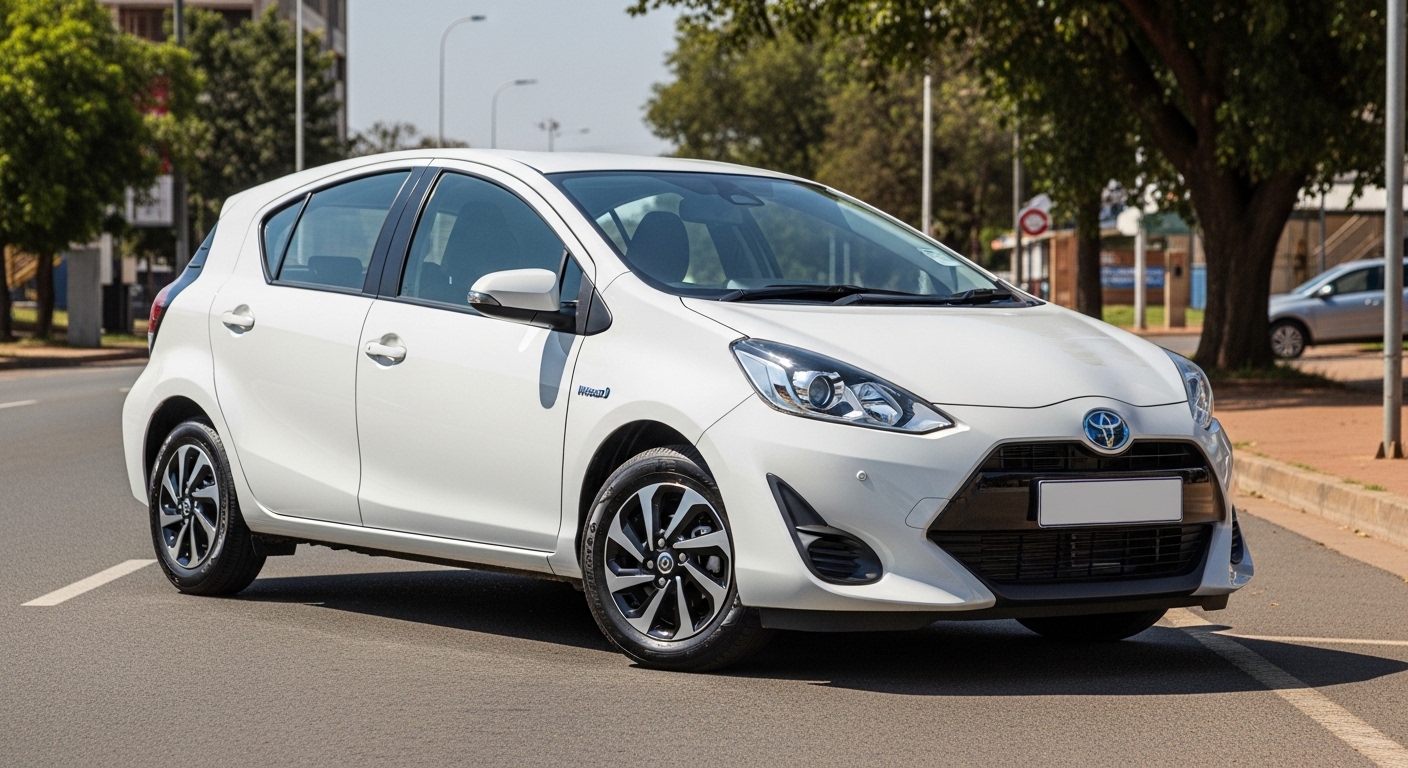 2022 Toyota Aqua
The Toyota Aqua is a compact five-door hybrid hatchback. It is easy to place on city streets, simple to park and well suited to stop-start traffic. Its hybrid system can recover energy while slowing, then use electric assistance when moving away from junctions.
A selected 2022 reference vehicle is identified as a hybrid with a 1500cc engine, automatic transmission, 2WD and five seats. The vehicle record shows 104,000 kilometres and auction grade 3.5. Those details apply to that particular vehicle, not every Aqua imported from Japan.
Toyota’s 2024 specification sheet also lists a 34.6 km/L WLTC result for a higher-efficiency configuration and 29.3 km/L for the GR Sport grade. The difference shows why wheel size, equipment and trim matter.
The Toyota Aqua is one of the strongest small-car choices for urban fuel saving. Toyota’s historical catalogue lists 33.8–38.0 km/L across older Aqua variants under JC08, while newer versions use WLTC figures. Buyers should compare matching model years and grades before deciding (Toyota’s Aqua fuel-economy catalogue, 2026).
The catch is space. The Aqua is less suitable when you regularly carry large luggage, several adults or bulky household items. Its lower hatchback shape also deserves a ground-clearance discussion before you choose it for rougher roads.
When reviewing a hybrid, check the auction sheet, odometer, warning lights, service evidence, tyres, underbody and inspection notes. Don’t assume an older Aqua is better value simply because its purchase price looks lower.
Best for: Gaborone commuting, solo drivers, couples and small families.
Skip it if: You often carry substantial luggage, need a taller driving position or regularly travel on rough roads.
For detailed model information, compare Toyota specifications before reviewing an individual vehicle record.
Toyota Yaris Hybrid: Is a Newer Compact Package Worth Considering?
In 2026, Toyota’s Japanese specification sheet lists 36.0 km/L WLTC for the Yaris Hybrid X 2WD (Toyota, “Yaris Specifications”, 2026). That is a strong official result, but it applies to a specific grade and drivetrain.
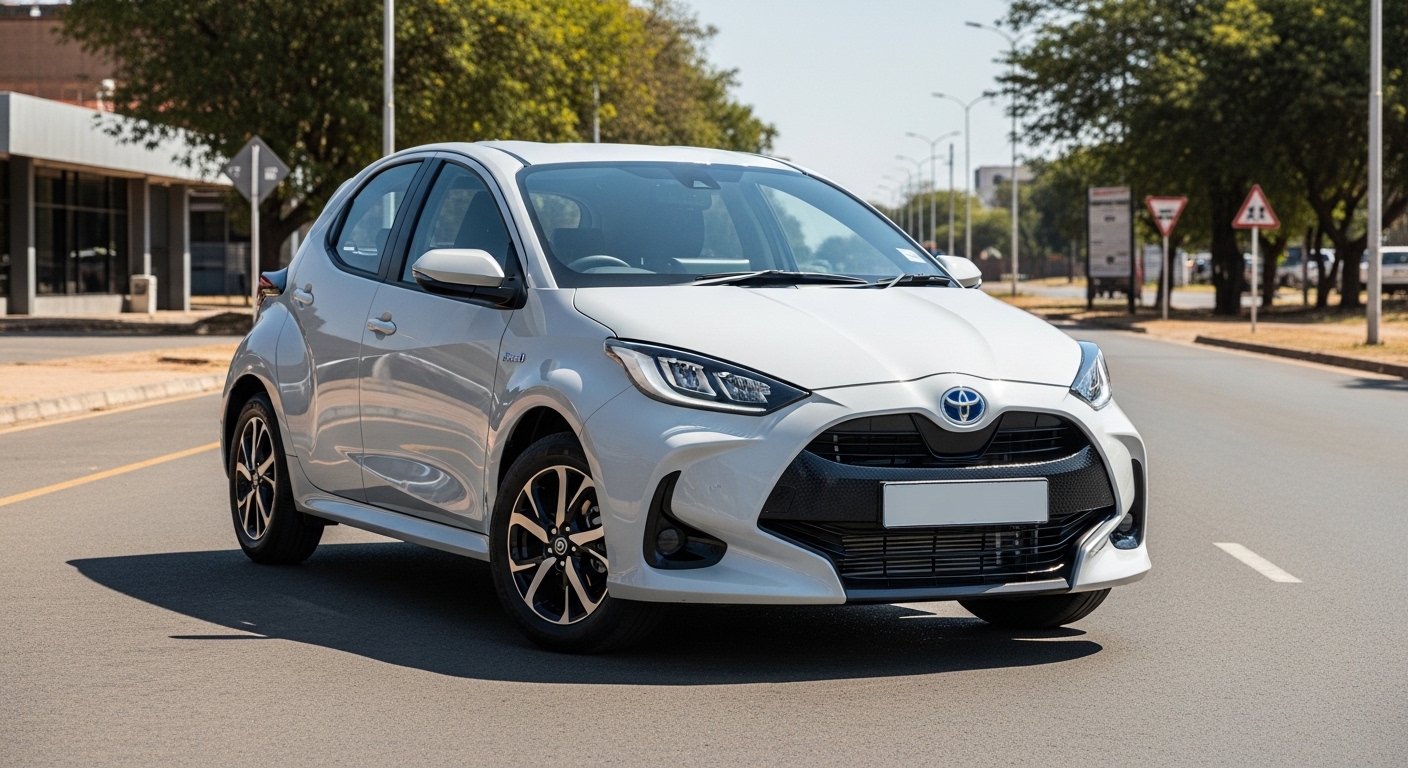 2021 Toyota Yaris
The Toyota Yaris is a compact five-door hatchback with a 1500cc hybrid powertrain in the reference model group. The vehicle-page data identifies automatic CVT transmission, 2WD, five seats and a hybrid fuel type. A 2021 reference vehicle is listed with 104,000 kilometres and auction grade 4.
Toyota’s current specification also lists 35.8 km/L WLTC for the Hybrid G 2WD. The same catalogue gives 20.3 km/L WLTC for a specified petrol configuration. That gap is why you must confirm the fuel type before assuming every Yaris offers hybrid-level economy.
The Yaris can feel like a more modern compact package than an older Aqua. Newer examples may offer updated safety equipment, cabin design and driver assistance, depending on grade. They can also sit in a higher BWP purchase band.
The Yaris is a strong compact hybrid choice, but its catalogue spans petrol and hybrid variants from 18.0 to 36.0 km/L across different configurations. The 36.0 km/L figure belongs to the 2026 Hybrid X 2WD, not every Yaris listed by model name (Toyota, “Yaris Catalogue”, 2026).
The Yaris has the same basic limitation as the Aqua: compact dimensions mean limited cargo space. It suits a commuter or small household better than a family that regularly travels with large bags.
A Yaris can also lose some of its urban advantage on open roads. Higher speeds, full air-conditioning and a loaded cabin place more demand on any small engine or hybrid system. What if your daily driving is mostly highway travel? In that case, comfort and stability may matter more than the top catalogue figure.
Best for: Buyers wanting a newer compact hybrid with strong official WLTC economy.
Skip it if: Your priority is the lowest entry cost or maximum family luggage space.
Which Corolla Hybrid Suits Your Needs?
In 2019, Toyota’s official Corolla Fielder specification sheet listed 34.4 km/L for a specified hybrid configuration (Toyota, “Corolla Fielder Specifications”, 2019). That figure shows why the Corolla family remains useful when space matters almost as much as fuel consumption.
The Corolla name covers several Japanese body styles. The Axio is a sedan, the Fielder is a wagon and the larger Corolla hatchback offers a more settled cabin and road feel. They shouldn’t be treated as one identical vehicle.
Toyota Corolla Axio Hybrid
The Toyota Corolla Axio suits buyers who prefer a compact sedan with a separate boot. A sedan can feel more settled on paved roads, while its conventional shape works well for daily commuting and work use.
The selected 2015 reference vehicle is identified as a hybrid with 26,000 kilometres and auction grade 4.5. Those figures are specific to that vehicle. They should not be used to assume that every older Axio has low mileage or a high auction grade.
Toyota’s 2021 Corolla Axio Hybrid EX 2WD specification lists 27.8 km/L WLTC and 32.2 km/L JC08 (Toyota, “Corolla Axio Vehicle Specification”, 2021). Since the two results use different cycles, they belong in separate comparisons.
The Axio’s main weakness is cargo flexibility. Its separate boot is useful for ordinary luggage, but the opening is less practical for tall or bulky items than the Fielder’s wagon hatch.
Best for: Sedan buyers who value compact dimensions and a separate boot.
Main catch: Less flexible cargo space than the Corolla Fielder.
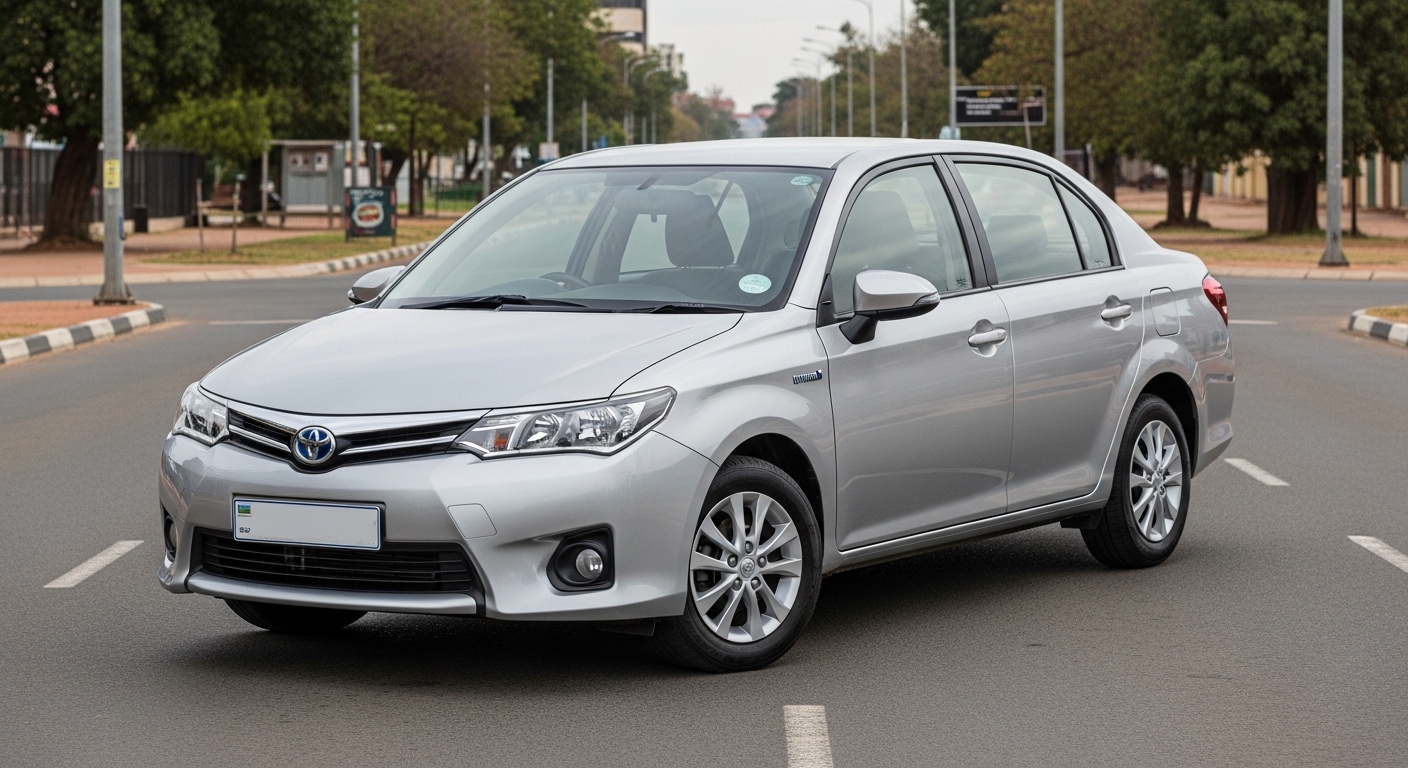 2015 Toyota Corolla Axio
Toyota Corolla Fielder Hybrid
The Toyota Corolla Fielder is the strongest family option in this comparison. Its wagon body gives you a larger rear opening and easier access for suitcases, groceries, school bags and other bulky items.
The selected 2021 reference vehicle is listed as a hybrid with 48,000 kilometres and auction grade 4. The Corolla category also identifies Fielder Hybrid variants with automatic transmission and 2WD. Exact engine size and equipment still need to be checked on the individual vehicle record.
Toyota’s earlier Fielder specification lists 33.8 km/L, while the 2019 sheet lists 34.4 km/L. The cited hybrid configuration also has a 36-litre fuel tank. These are older Japanese catalogue figures, so they shouldn’t be presented as current WLTC results (Toyota, “Corolla Fielder Specifications”, 2019).
The Corolla Fielder Hybrid is a strong compromise between fuel use and family usefulness. Toyota’s 2019 specification sheet lists 34.4 km/L for a cited hybrid configuration, but the result belongs to that grade and Japanese test method, not every Fielder on the market (Toyota’s Corolla Fielder specifications, 2019).
The Fielder may use more fuel than a small Aqua in urban driving. That doesn’t automatically make it worse value. If it prevents you from needing a larger SUV for luggage, its greater usefulness may outweigh a small difference in consumption.
Inspect tyres, suspension, underbody condition and the hybrid system evidence before buying an older wagon. Inter-town travel exposes worn components more quickly than short urban trips.
Best for: Families, luggage-heavy trips and regular travel between towns.
Main catch: Larger than the Aqua and potentially less economical for solo urban driving.
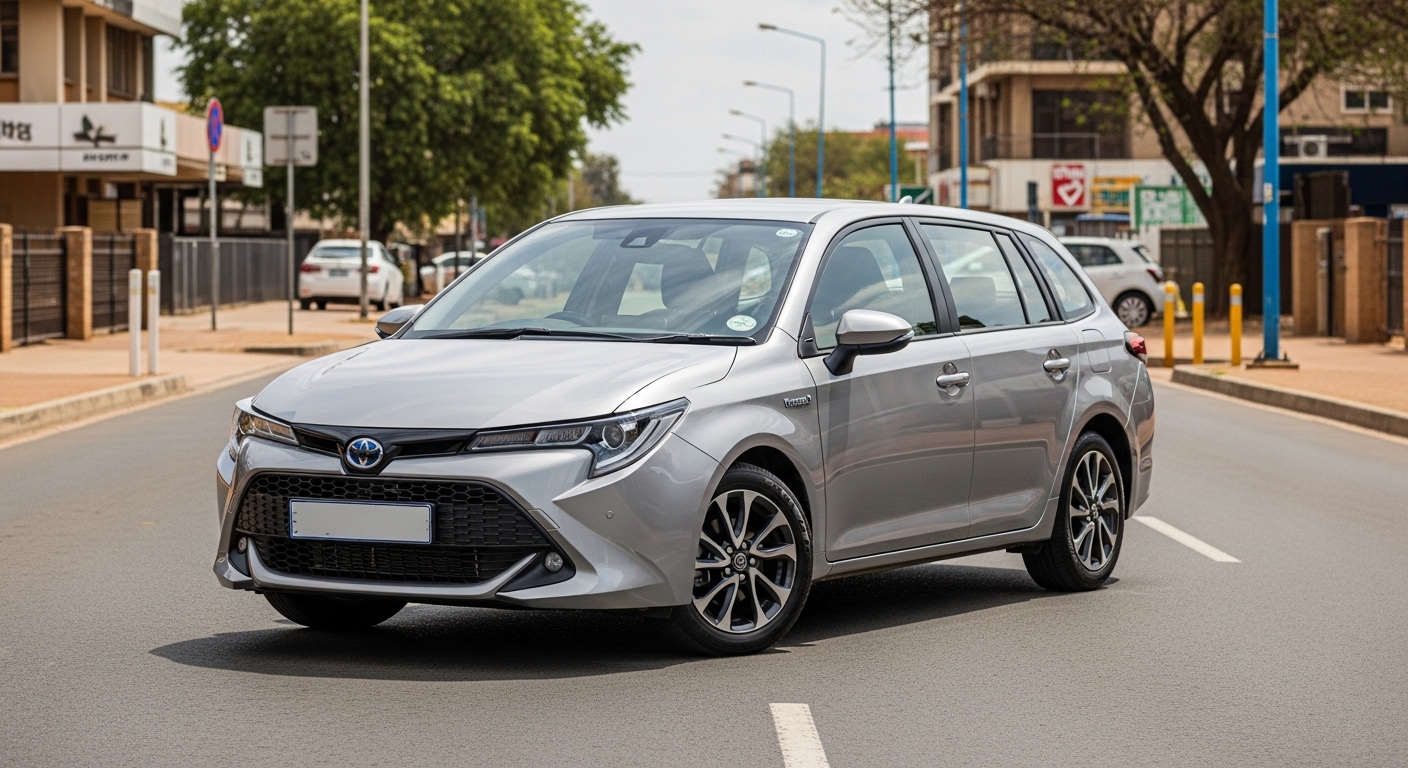 2021 Toyota Corolla Fielder
Toyota Corolla Hybrid
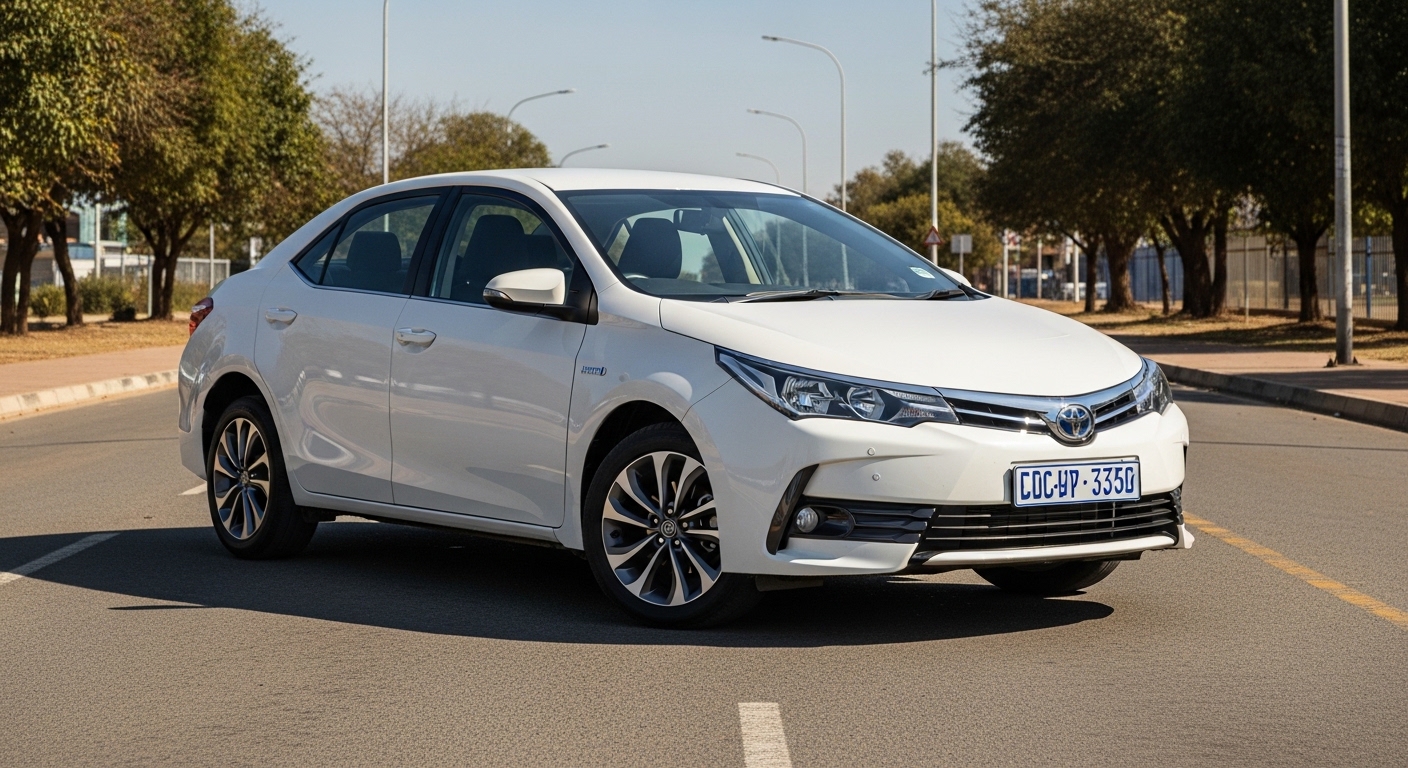
The Toyota Corolla is the better fit when passenger comfort and longer paved-road trips matter nearly as much as fuel use. In 2021, Toyota listed 25.6 km/L WLTC for a specified Corolla Hybrid configuration with 17-inch wheels (Toyota, “Corolla Specifications”, 2021).
The selected 2018 reference vehicle is a hybrid hatchback with a 1800cc engine, 2ZR-FXE engine code, automatic transmission, FWD, five seats and 72 kW / 98 PS of power. Its vehicle record shows 94,000 kilometres and auction grade 4.
That 2018 vehicle should not be assigned the 2021 25.6 km/L figure without matching its exact grade, body style and wheel configuration. Toyota’s 2021 specification sheet gives different results across grades, with some configurations reaching higher figures.
The Corolla provides more cabin width and a more settled feel than a small hatchback. That matters when you spend hours on the road with passengers. It can also make more sense for a high-mileage driver, even if its official figure is lower.
Best for: Regular inter-town travel, passengers and buyers who want a more comfortable family car.
Main catch: A larger body may mean a higher BWP purchase band and larger tyres; running costs depend on the grade, condition and local parts prices.
 2018 Toyota Corolla
Mazda Demio: Is It the Best Non-Hybrid Alternative?
In 2018, Mazda’s official Demio specification sheet listed approximately 19.0 km/L WLTC for selected 2WD petrol configurations (Mazda, “Demio Specifications”, 2018). That is useful economy, but it doesn’t match a well-suited hybrid in stop-start traffic.
 2016 Mazda Demio
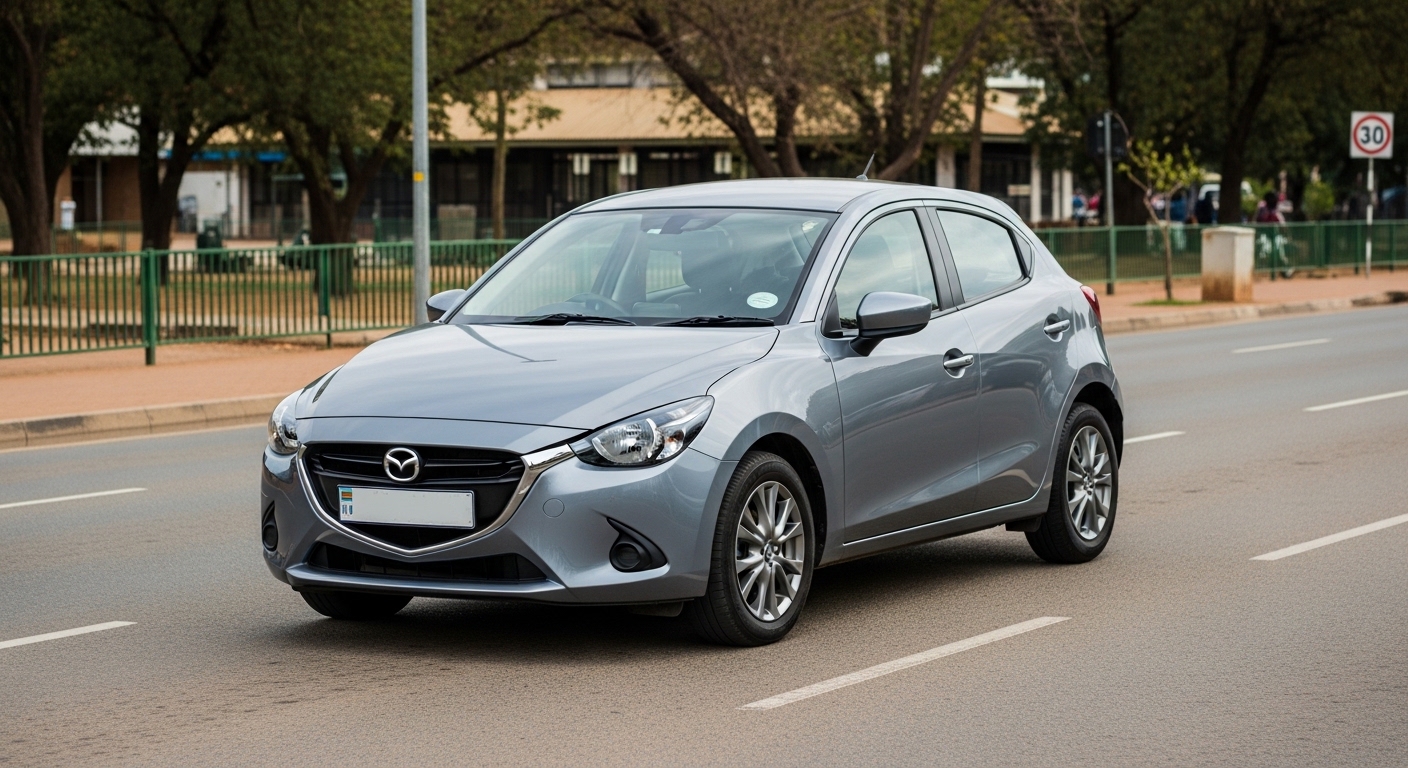
The Mazda Demio is a compact five-door petrol hatchback. The selected 2016 reference vehicle is listed with a 1300cc petrol engine, automatic transmission, 2WD, five seats, 41,000 kilometres and auction grade 4.
A comparable 1300cc petrol Demio uses Mazda’s P3-VPS engine family and produces approximately 68 kW / 92 PS. The exact engine code, transmission and drivetrain should still be confirmed for the vehicle you are considering.
Mazda’s sheet also lists different results for 4WD petrol and diesel variants. Selected 4WD petrol versions are around 17.2 km/L WLTC, while diesel examples can reach higher official figures. Diesel economy should not be used as the general Demio recommendation for a petrol buyer.
The Mazda Demio is a sensible non-hybrid alternative when purchase price and mechanical simplicity matter. Mazda’s 2018 specification sheet lists approximately 19.0 km/L WLTC for selected 2WD petrol grades, but engine, drivetrain and transmission can change the result (Mazda’s Demio specifications, 2018).
The Demio can suit a lower-mileage driver who doesn’t want a hybrid system. It is compact around Gaborone, easy to park and generally practical for one or two people.
The trade-off is clear. A petrol Demio may have a lower purchase band, but it won’t necessarily deliver the same urban fuel saving as an Aqua or Yaris Hybrid. Confirm local servicing knowledge and parts access before choosing an unfamiliar engine variant.
Best for: Buyers wanting a compact petrol hatchback and a lower-complexity alternative.
Skip it if: Your main goal is the lowest possible urban fuel consumption.
For deeper technical checks, compare the available Mazda specifications.
Which Fuel-Efficient Car Fits Your Botswana Driving Pattern?
In 2026, Toyota’s specified Yaris Hybrid X 2WD figure is 36.0 km/L WLTC, while Mazda’s selected Demio petrol figure is about 19.0 km/L WLTC (Toyota’s Yaris specifications, 2026; Mazda’s Demio specifications, 2018). The right choice depends on use, condition and total cost, not one headline number.
| If you mostly… | Start with… | Why it fits | Main caution |
|---|---|---|---|
| Drive around Gaborone | Toyota Aqua | Compact hybrid suited to stop-start traffic | Smaller cabin and boot |
| Want a newer small hybrid | Toyota Yaris Hybrid | Strong official WLTC results in selected grades | Confirm year, grade and drivetrain |
| Carry family luggage | Corolla Fielder Hybrid | Wagon opening and useful cargo space | Older examples need careful inspection |
| Prefer a sedan | Corolla Axio Hybrid | Separate boot and compact dimensions | Less flexible cargo area |
| Travel between towns often | Toyota Corolla or Fielder | More space and road comfort | Higher purchase and tyre costs on some grades |
| Want a petrol alternative | Mazda Demio | Compact and lower-complexity option | Economy varies by engine and drivetrain |
| Need rough-road ability | Assess clearance and tyres first | Economy alone doesn’t determine road suitability | A compact hybrid isn’t a 4WD substitute |
The Toyota Aqua is the strongest urban starting point. The Fielder is the better family compromise. The Mazda Demio is the clearest petrol alternative. The Corolla Axio suits sedan buyers, while the larger Corolla makes more sense when road comfort matters.
A well-documented petrol car can be better value than a poorly documented hybrid. A hybrid can also be the smarter choice for a high-mileage commuter, even if its purchase band is higher.
Before deciding, ask yourself three questions. How many kilometres do you drive each month? How often do you carry passengers and luggage? Will most of your driving happen in town, or at highway speed between towns?
These answers matter more than a small difference in catalogue figures. So does condition. Check the auction grade, odometer, inspection evidence, warning lights, tyres, underbody and service records before payment.
What Does Fuel Economy Mean for Import Cost in Botswana?
In 2026, BURS guidance says vehicles for home consumption should be cleared within 14 days of entry (BURS, “Clearance of Motor Vehicles”, 2026). Fuel economy therefore needs to be considered alongside clearance, customs assessment, registration and the vehicle’s condition.
The vehicle amount is not the same as the final on-road cost. Buyers should separate the vehicle price, shipping, CIF value, customs assessment, clearance, registration and licensing.
Botswana import charges depend on the vehicle’s customs classification, assessed value, applicable duty, VAT and other charges. Confirm the calculation with BURS before payment, and use the official proforma invoice for the vehicle-specific amount.
The vehicle page’s estimated landed-cost panel is the useful next step for comparing a specific car. It gives a vehicle-level estimate rather than pretending that every Aqua, Yaris or Demio has the same total cost.
A dated review of the Japan feed on 15 August 2026 showed 10 Yaris listings, 16 Corolla-family listings and six Demio listings. The model mix included hybrid and petrol variants, different grades and different odometer readings. These figures are a snapshot, not a permanent stock claim.
The import route matters for Botswana. Carbarn’s published process describes RoRo shipping from Japan to Durban, with Walvis Bay available as an alternative port. Its 24–34-day estimate is a published purchase-confirmation-to-arrival estimate, not a guaranteed delivery time; confirm the current stage and estimate on the individual vehicle page.
How the Japanese import process works explains the sequence from selecting a vehicle to payment, inspection, shipping and dashboard tracking. Botswana import rules and requirements covers eligibility and documentation; Carbarn’s Japan sourcing policy focuses on right-hand-drive vehicles, which is not the same as a Botswana legal requirement.
For readers comparing actual vehicles, Carbarn’s vehicle pages show the listed specifications, price information and an estimated landed-cost panel. Carbarn’s published buying process describes an auction sheet and Carbarn inspection report before payment, along with RoRo shipping options through Durban or Walvis Bay. Check the individual vehicle page and current terms for payment, timing, charges and service limits before committing.
The Bottom Line
The most fuel-efficient Japanese car for Botswana depends on how you drive.
Choose the Toyota Aqua for compact urban economy. Consider the Yaris Hybrid if you want a newer small-car package. Pick the Corolla Fielder when luggage and family space matter. The Axio is a sensible sedan, while the larger Corolla offers better long-distance comfort. The Demio remains worth considering when you prefer a petrol car.
Always compare matching WLTC or JC08 figures. Then check the exact year, grade, drivetrain, wheel size, condition and inspection evidence. Finally, compare the vehicle-specific landed-cost estimate rather than judging the vehicle price alone.