Wanting something more interesting than a Corolla or small hybrid is understandable. The harder question is whether a low, two-door car can handle commuting, shopping, speed bumps and the occasional long inter-town trip.
Botswana gives sporty imports a mixed test. Main tar routes can suit them well, but gravel shoulders, potholes, sand and poorly judged bumps demand more care. A 2025 Botswana DailyNews report on the country’s road network recorded 32,500 kilometres in total, including 10,725 kilometres of tarred roads (BOPA, “A1 highway to have toll gates,” 2025).
This guide compares the Toyota 86, Lexus RC300h, Mazda MX-5 Roadster and Subaru BRZ. It focuses on space, fuel, ground clearance, condition, servicing and daily use, rather than outright performance.
Quick Answer
- A Toyota 86 is the strongest one-car choice for mostly sealed roads. In Toyota Japan’s 2026 fuel data, early 86 models are listed at 12.4–13.4 km/L under JC08 (Toyota Japan, “86 fuel information,” 2026).
- The Lexus RC300h offers a quieter, automatic four-seat alternative.
- The Mazda MX-5 suits one or two people, but its two-seat layout limits daily flexibility.
- The Subaru BRZ is a similar 2+2 coupe, subject to exact sourcing and inspection.
What makes a sporty import difficult to use every day in Botswana?
A sporty car can work daily, but low clearance, restricted luggage space and petrol running costs become more noticeable on ordinary journeys. Rougher surfaces also raise the importance of tyres, suspension condition and careful driving.
A low coupe is most comfortable around Gaborone and on sealed inter-town roads. Frequent gravel, deep sand or rough road edges change the decision. Why buy a sporty car if every speed bump becomes a calculation?
| Daily routine |
Likely fit |
| Mostly sealed roads around Gaborone |
Stronger fit |
| Regular gravel or sandy routes |
Choose carefully and inspect underneath |
| Frequent family passengers |
Four-seat coupe preferred |
| Large luggage loads |
Restrictive |
| Lowest fuel cost is the priority |
A small hybrid is probably more suitable |
Heat and dust matter too. A fixed roof gives the Toyota 86 and Lexus RC300h better everyday protection than a soft-top roadster. Air-conditioning performance should form part of any inspection, especially before a long drive between towns.
Is the Toyota 86 the strongest one-car coupe choice?
The Toyota 86 is the strongest daily-driver candidate because it combines a fixed roof, four seats and a compact body with rear-wheel drive. Toyota’s official 2013 G specification lists a 1,998cc FA20 engine, 200 PS and 205 Nm (Toyota Japan, “86 G vehicle information,” 2013).
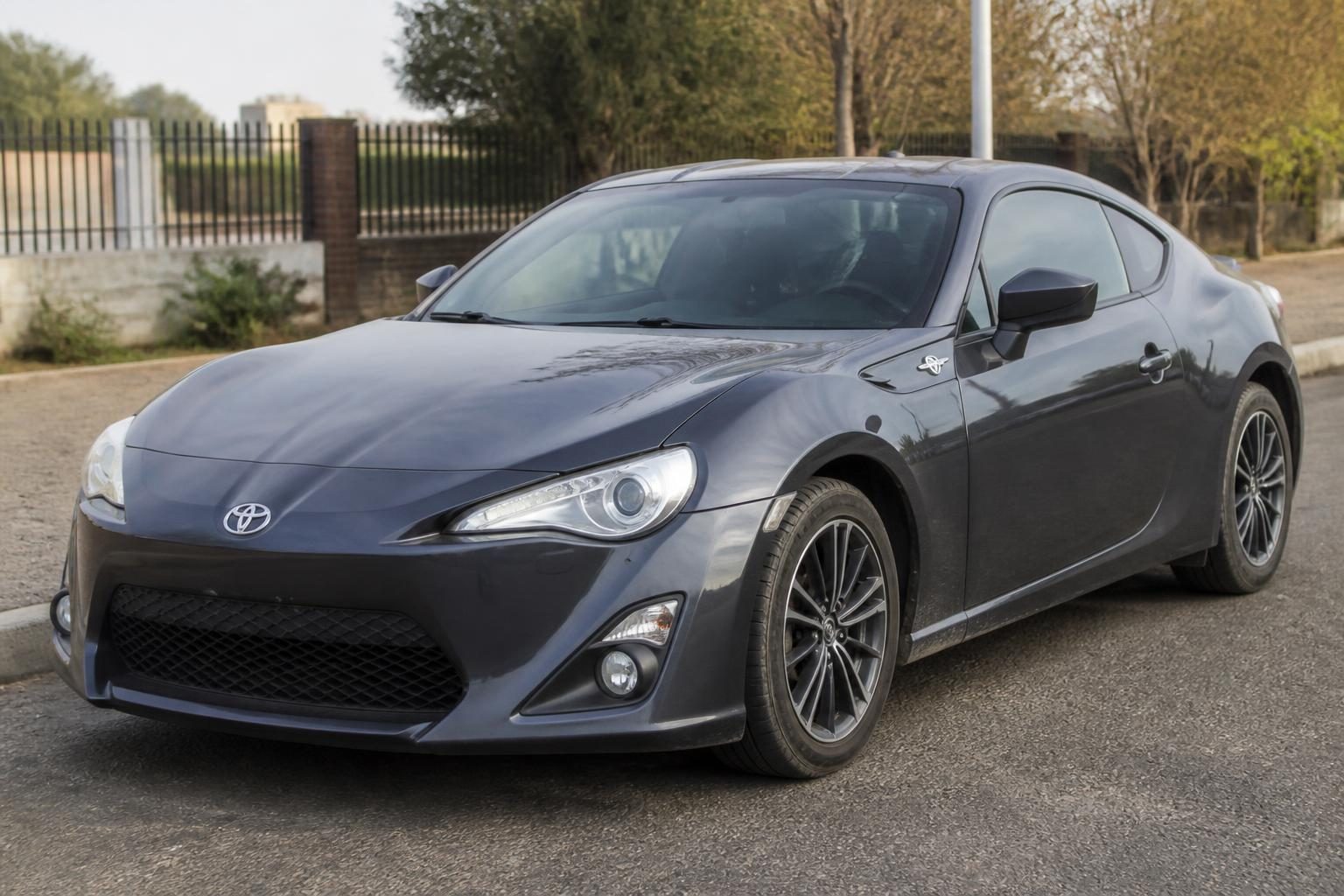 2016 Toyota 86, Japan stock available to import to Botswana
The 2016 Toyota 86 example records 86,204 kilometres, a grade 3.5, a manual transmission, rear-wheel drive, a 2,000cc petrol engine and four seats. Its vehicle page also records a 50-litre tank, a 4,285mm length and a 1,790mm width (2016 Toyota 86 inspection report, 2026). Its low-slung body means speed bumps and steep driveways need attention, especially around Gaborone.
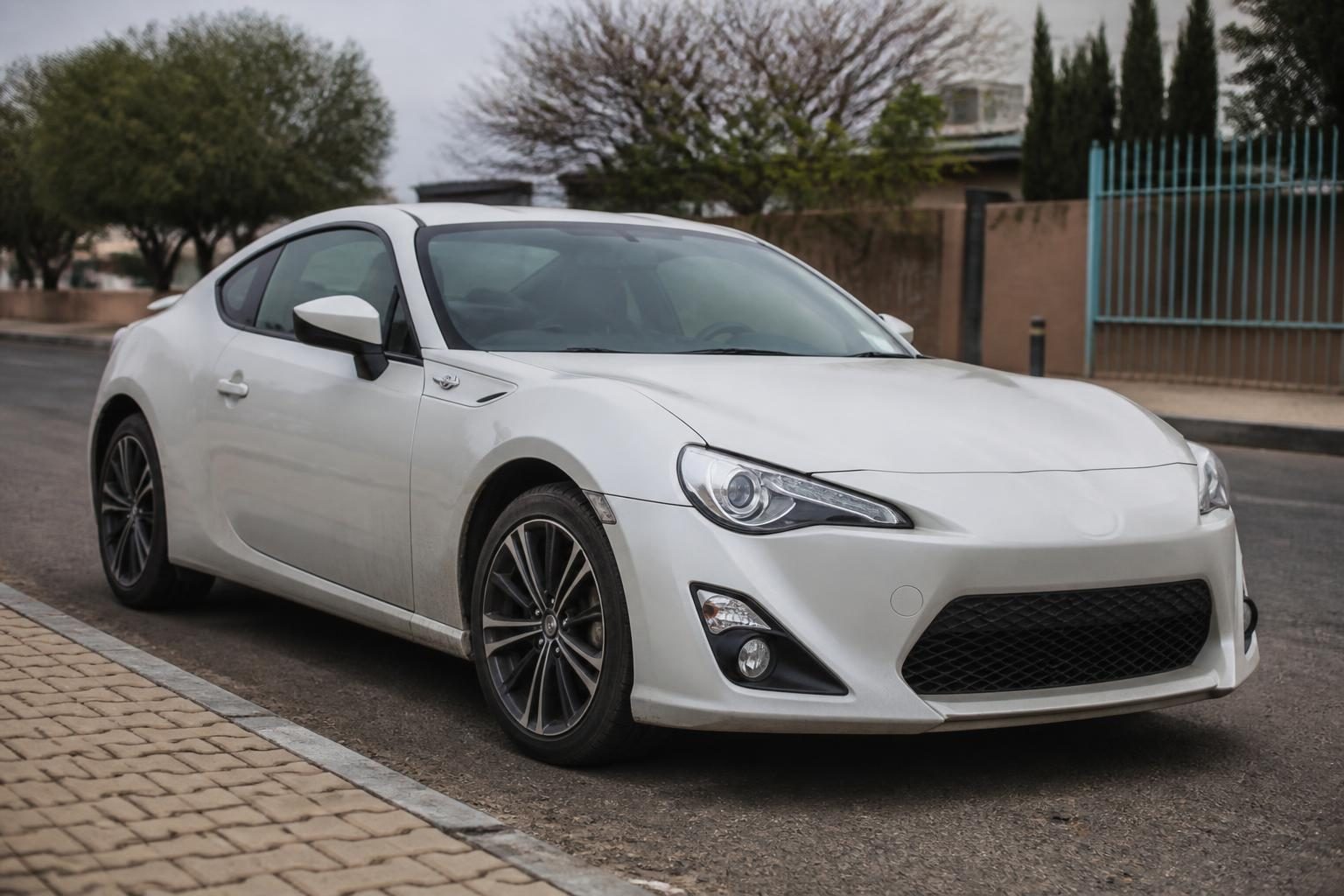 2016 Toyota 86, Japan stock available to import to Botswana
The 2+2 layout is useful, but the rear seats are occasional-use spaces rather than a family solution. The fixed roof helps with heat, dust and rain, while the boot is more useful than the MX-5’s. Toyota’s fuel page lists 12.4–13.4 km/L JC08 for early models and 11.8–12.8 km/L WLTC for later versions. These are test figures, not guaranteed Botswana consumption.
A dated comparison of the 2013 examples also shows why condition matters more than mileage alone. The 78,000km car has grade 3.5 and 3mm tyres, while the 111,000km car has grade 4, a clean underbody and only minor boot-lid marks (2013 Toyota 86 inspection report, 2026; 2013 Toyota 86 vehicle page, 2026).
Is the Lexus RC300h a calmer four-seat coupe?
The 2015 Lexus RC300h is the more comfort-focused option, with a 2,500cc hybrid powertrain, automatic transmission, rear-wheel drive and four seats. The vehicle page records 79,000 kilometres, grade 4.5, 5mm tyres and a clean underbody (2015 Lexus RC300h inspection report, 2026).
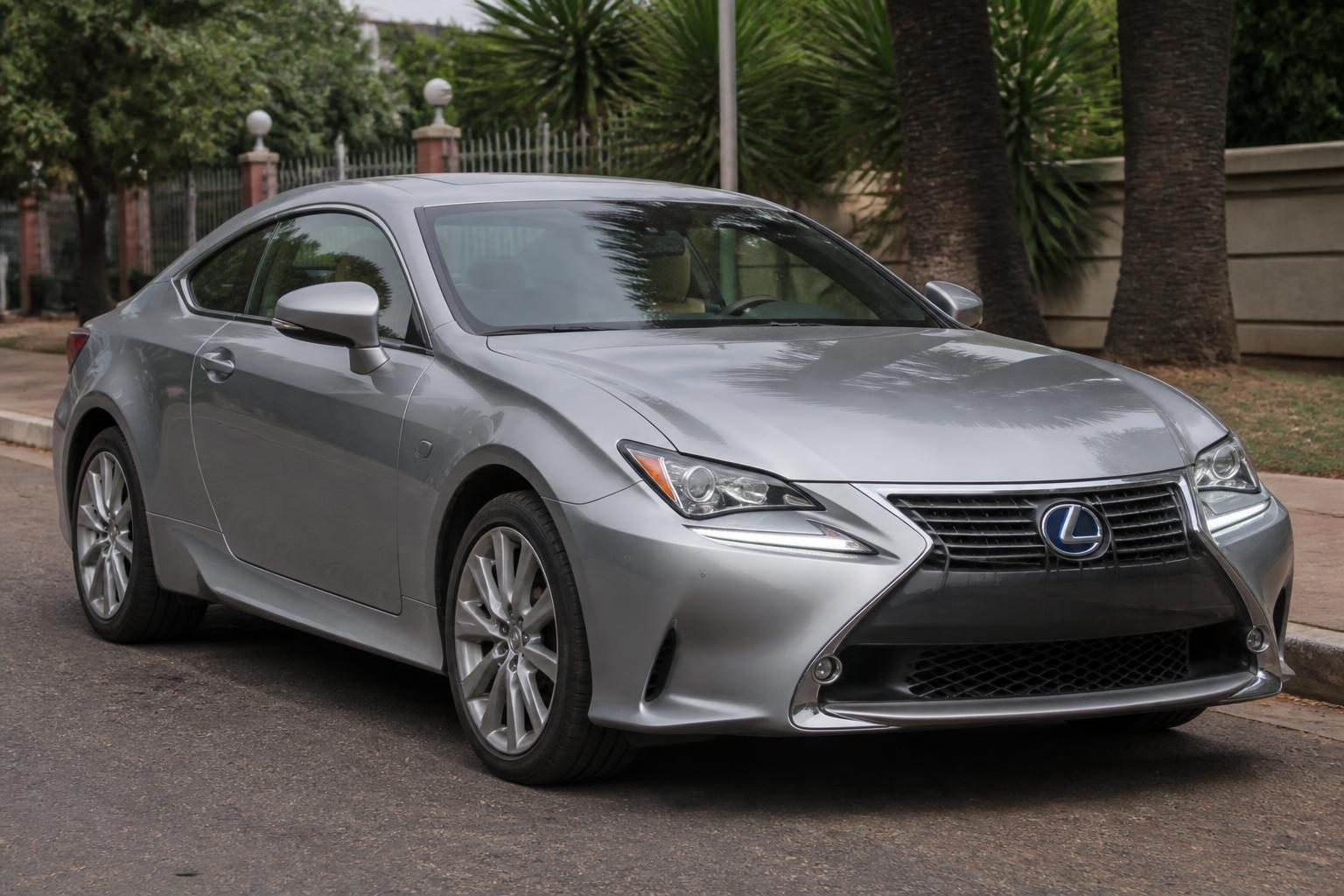 2015 Lexus RC300H, Japan stock available to import to Botswana
The RC300h makes more sense for a buyer who values automatic commuting, a quieter cabin and a more substantial feel. Its rear seats add flexibility, although access and legroom should be checked before treating it as a family car. The 4,695mm body is also longer than the 86, which may matter in tight parking areas.
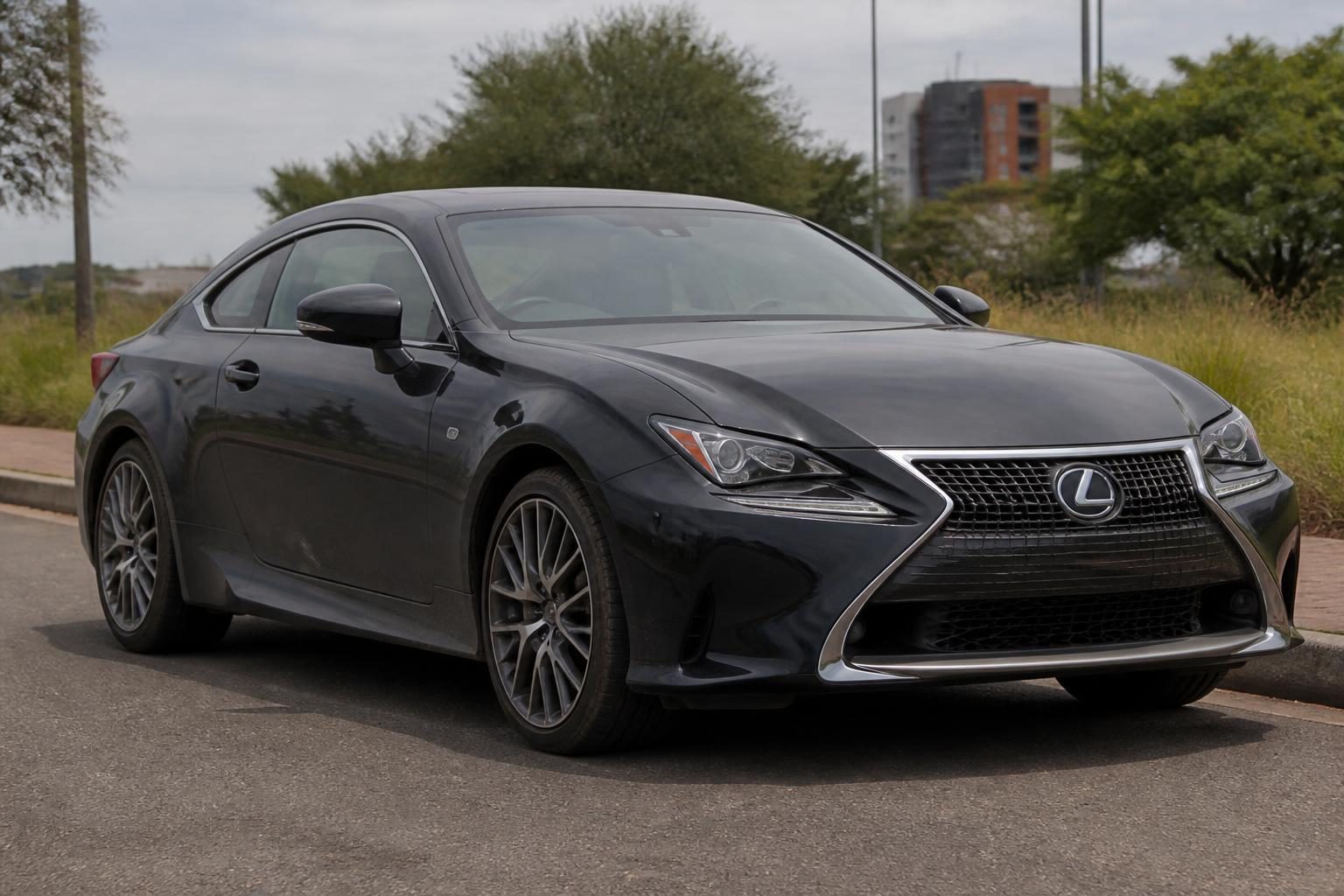 2015 Lexus RC300H, Japan stock available to import to Botswana
A second 2015 Lexus RC300h example records 104,000 kilometres and grade 4. Its inspection reports no damage and a clean underbody, although tyre tread is not available on the page (2015 Lexus RC300h inspection report, 2026). The higher odometer does not automatically make it the weaker choice. Hybrid warning lights, battery condition, suspension wear and replacement-part access deserve specific checks.
Mazda MX-5 Roadster: a specialised two-seat option
The Mazda MX-5 Roadster is a strong two-person road car, but its two-seat layout makes it a specialised daily choice. Mazda’s 2015 Japanese launch release lists a 1.5-litre SKYACTIV-G engine, rear-wheel drive and 17.2 km/L JC08 for the manual version (Mazda Newsroom, “All-new Mazda Roadster Goes on Sale in Japan,” 2015).
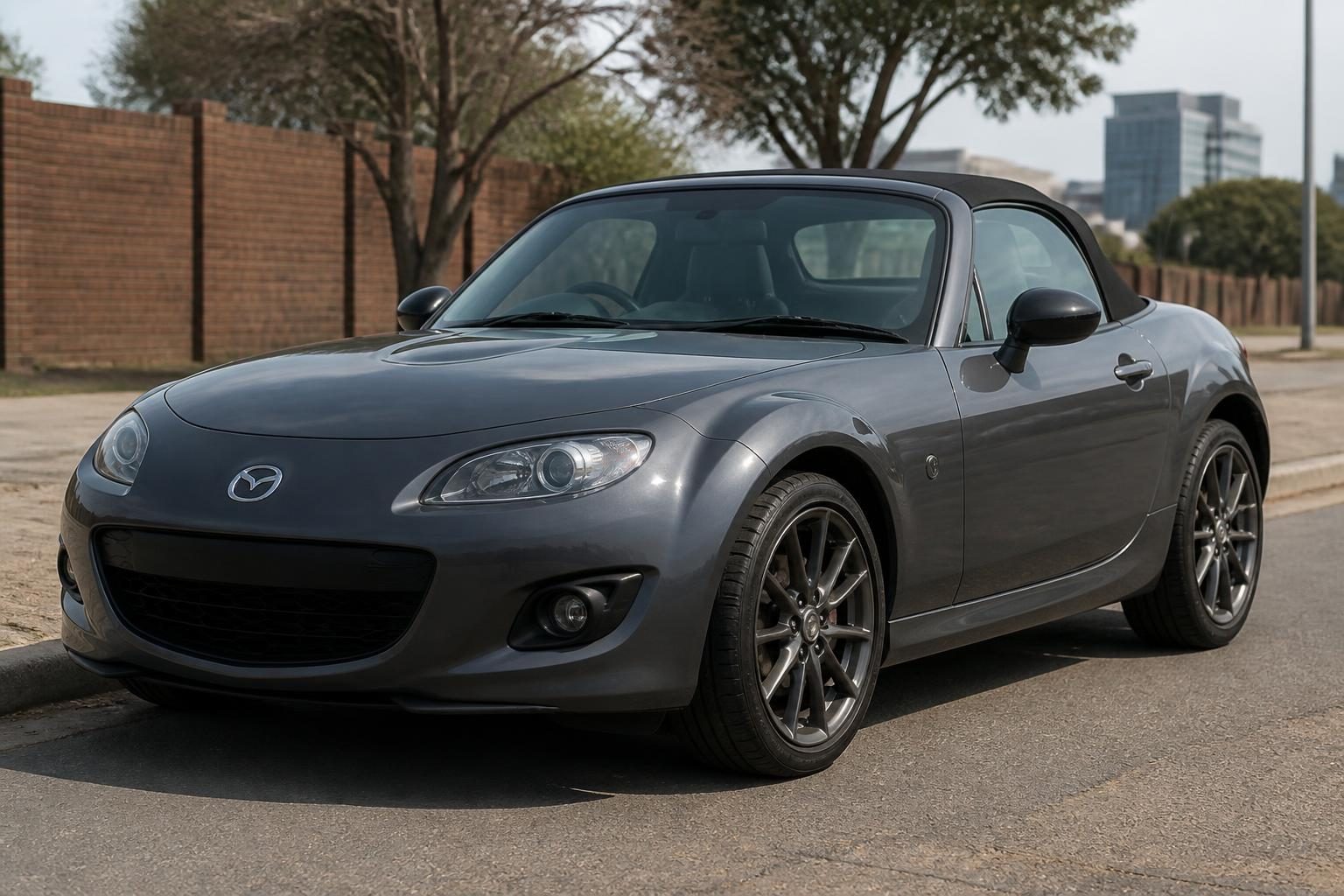 2015 Mazda MX-5 Roadster, Japan stock available to import to Botswana
The 2015 example records 97,000 kilometres, grade 4, a manual transmission, rear-wheel drive and two seats. Its inspection lists 4mm tyre tread, a clean underbody and minor marks near the front headlight. The vehicle page records the P5-VP[RS] engine code, 131 as the power figure, a 3,915mm length and a 1,735mm width (2015 Mazda MX-5 vehicle page, 2026).
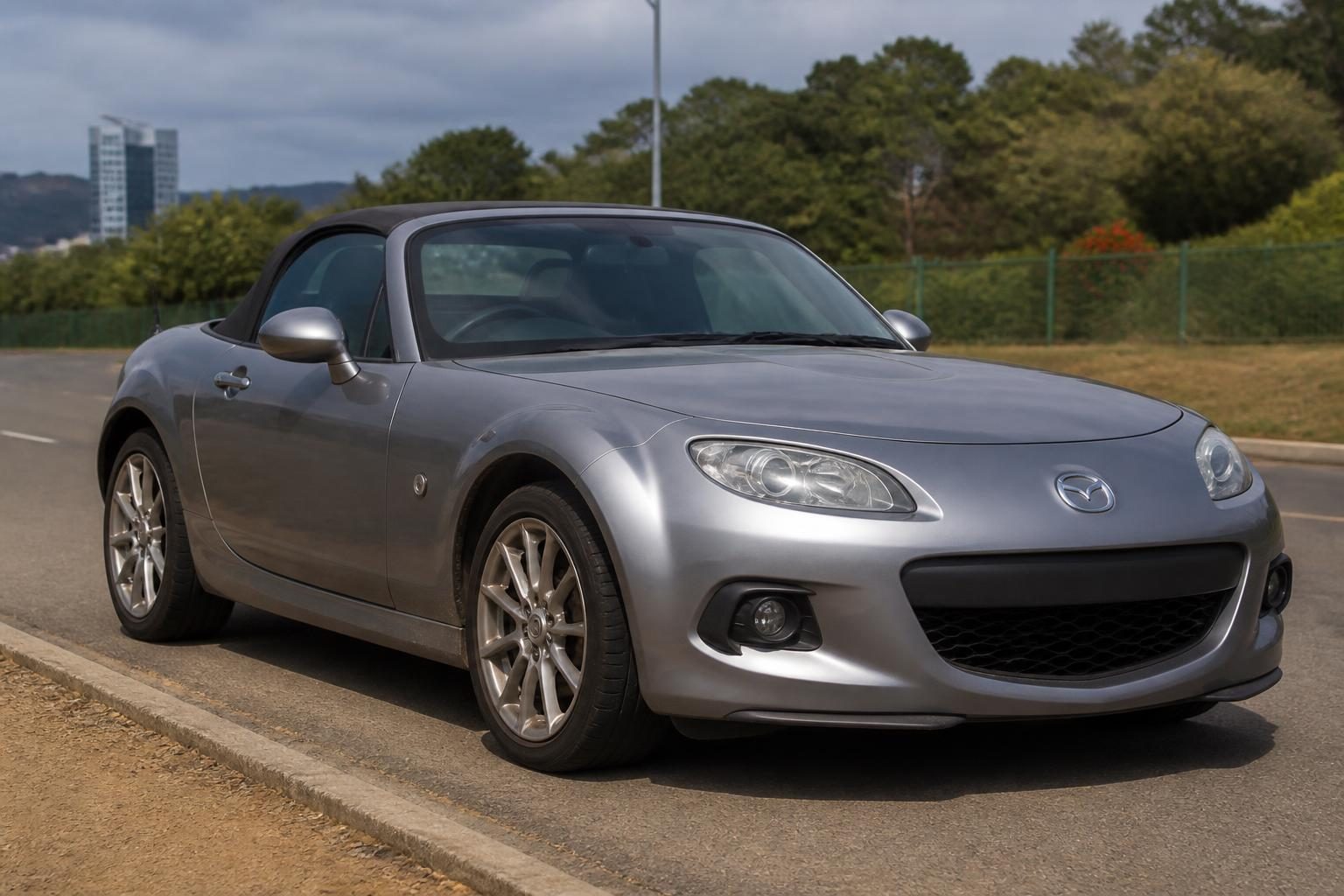 2015 Mazda MX-5 Roadster, Japan stock available to import to Botswana
Mazda’s launch data lists 18.6 km/L JC08 for the automatic, but that figure does not apply to this manual example. The soft top is easy to enjoy, yet it offers less protection from dust and heat than a fixed roof. For a one-car household, the lack of rear seats is the main catch.
Subaru BRZ: the closest Toyota 86 alternative
The Subaru BRZ follows the same broad formula as the Toyota 86: a compact, fixed-roof, rear-wheel-drive sports coupe with occasional rear-seat space. In 2012, Toyota’s official 86 launch release listed 200 PS and a 13.4 km/L JC08 figure for a lightweight specification (Toyota Global, “TMC to Launch Compact Sports Car 86,” 2012).
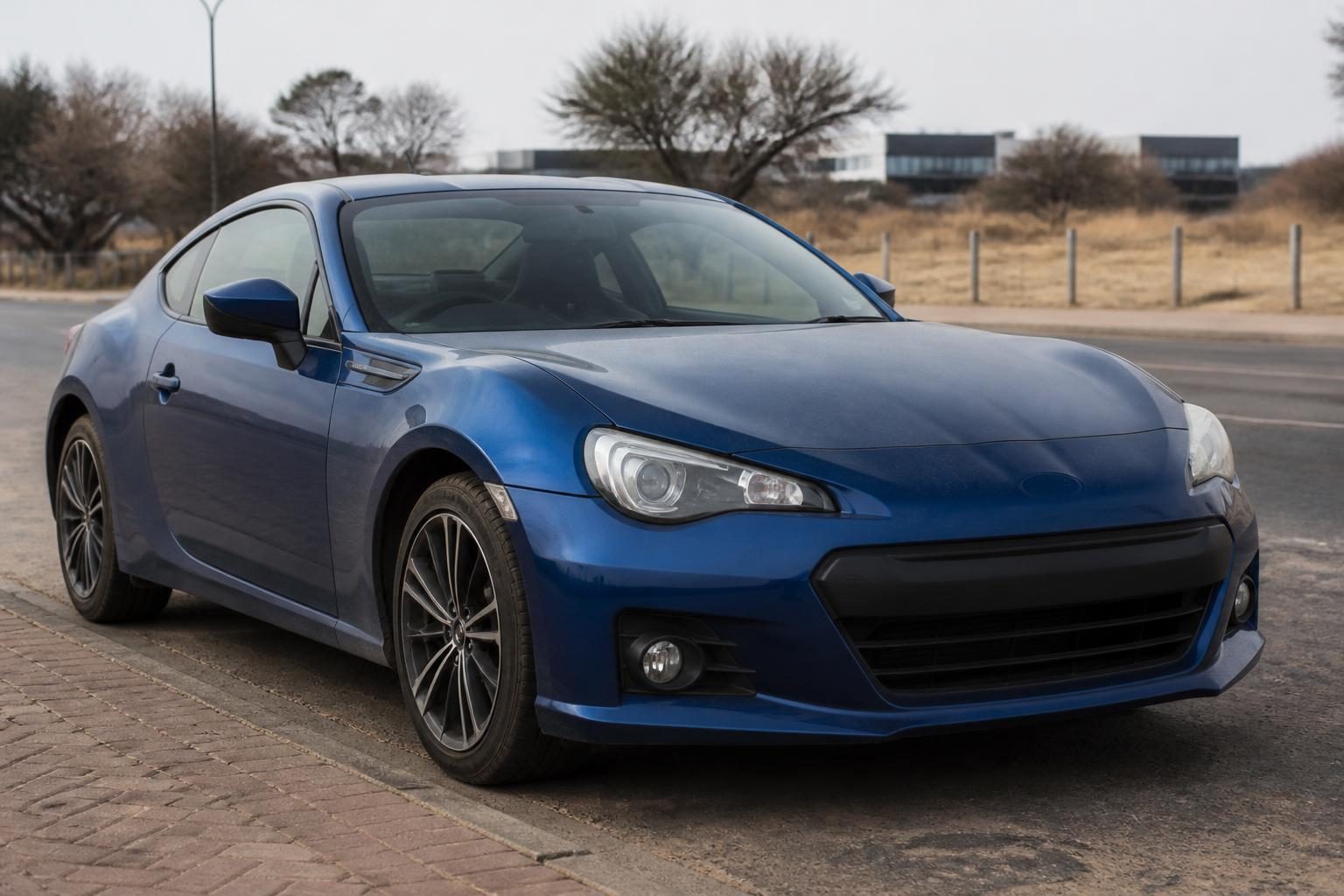 2013 Subaru BRZ, Japan stock available to import to Botswana
The BRZ is worth considering when the buyer wants the 86’s layout but is open to another model. No validated vehicle page was supplied for a current BRZ example, so exact year, model code, transmission, odometer, auction grade and fuel figure must be confirmed before purchase.
Its buyer fit is similar to the 86. Mostly sealed-road driving, limited passenger needs and careful route selection suit it. Frequent sand, rough gravel or family transport point towards a taller, more practical vehicle instead.
Which coupe suits your daily routine?
In 2026, the compared vehicle examples range from two seats and 97,000 kilometres in the MX-5 to four seats and 79,000 kilometres in the higher-grade RC300h (2015 Mazda MX-5 vehicle page; 2015 Lexus RC vehicle page). The Toyota 86 sits between them as the more balanced one-car choice.
| Consideration |
Toyota 86 |
Lexus RC300h |
Mazda MX-5 |
Subaru BRZ |
| Body style |
Fixed-roof coupe |
Fixed-roof coupe |
Convertible roadster |
Fixed-roof coupe |
| Seats |
Four |
Four |
Two |
Generally 2+2 |
| Powertrain |
Petrol |
Hybrid |
Petrol |
Petrol |
| Transmission |
Manual in inspected example |
Automatic |
Manual in inspected example |
Confirm exact vehicle |
| Drivetrain |
Rear-wheel drive |
Rear-wheel drive |
Rear-wheel drive |
Confirm exact vehicle |
| One-car use |
Strongest sports-car fit |
Comfort-focused |
Specialised |
Similar to 86 |
| Main catch |
Clearance and rear space |
Size and hybrid checks |
No rear seats |
Sourcing and condition |
Editorial buyer-fit scorecard
| Daily requirement |
Toyota 86 |
Mazda MX-5 |
| Sealed-road commuting |
4/5 |
3/5 |
| Occasional passengers |
3/5 |
1/5 |
| Luggage flexibility |
3/5 |
2/5 |
| Rough-road tolerance |
2/5 |
2/5 |
| One-car household use |
4/5 |
2/5 |
These are editorial judgements, not road-test results. Choose the 86 if you need one sporty car. Choose the MX-5 if you mostly travel alone or as a couple and have another practical vehicle. Choose neither if low running costs, large loads or rough-road ability come first.
What should you check before importing a used coupe?
Condition deserves as much attention as the badge. In 2026, the Government of Botswana states that vehicles more than three years old must pass a roadworthiness test before registration, and all vehicles require customs clearance (Government of Botswana, “Vehicle Registration and Licensing,” 2026).
Start with the auction sheet and the detailed inspection report. Then check the underbody, bumpers, tyres, suspension, clutch, gearbox, cooling system and air-conditioning. Non-standard wheels, lowered suspension, loud exhausts and other modifications need careful questioning.
A higher auction grade can help, but it is not a complete mechanical diagnosis. The 2013 Toyota 86 examples show the point: the higher-mileage grade 4 car may deserve closer consideration than the lower-mileage grade 3.5 car with 3mm tyres. Botswana has no import age limit, but that gives you more choice, not a reason to skip condition checks. Confirm eligibility and current requirements in the Botswana vehicle import rules before choosing an older coupe.
How does the Japan-to-Botswana buying process work?
A coupe imported from Japan should be judged by its documents, inspection evidence and final landed-cost estimate, not by photographs alone. Allow about 24 to 34 days from purchase confirmation to arrival, subject to the route and shipping schedule. Allow extra time for customs and inland transport. The Carbarn How to Buy process explains the steps.
The listed vehicle-plus-shipping-and-inspection price is not the final registered on-road cost. Customs duty, VAT, clearance, registration and licensing remain separate buyer responsibilities. Use the individual vehicle page’s Estimated landed cost in Botswana panel, then confirm final figures on the proforma invoice.
Carbarn is not a legal entity in Botswana and operates internationally from Japan under Carbarn LLC (Carbarn Terms & Conditions). Its service provides Japan-stock vehicles, an auction sheet, a Carbarn inspection report described on vehicle pages as post-purchase, vehicle-plus-shipping-plus-inspection pricing, a self-service dashboard for invoices, reports, bill of lading and live vessel tracking, and RoRo shipping to Durban as the standard route, with Walvis Bay possible subject to quote confirmation. Responsibility ends at delivery to the designated export port, typically Durban, under the Carbarn Terms & Conditions. There is no promise of delivery inside Botswana.