Toyota accounted for 40.6% of the 135,021 motor vehicle licence renewals recorded in Botswana in the second quarter of 2026. The figure comes from Statistics Botswana's Transport and Infrastructure Stats Brief, Q2 2026. Renewals count cars that were already licensed and kept in use. They say nothing about how many cars were imported or sold this year. If you're weighing up a Toyota against another make, that distinction decides what the number can and can't tell you.
Quick Answer
- Toyota: 40.6% of 135,021 licence renewals in Q2 2026 (Statistics Botswana).
- Mazda followed at 10.6%, then Honda at 10.1%.
- Renewals count the licensed fleet, not new imports or sales.
- A large Toyota fleet likely means easier parts and servicing. That's reasoning, not a measured figure.
What does the Statistics Botswana figure say?
Statistics Botswana recorded 135,021 motor vehicle licence renewals in Botswana in Q2 2026. Toyota held 40.6% of them, Mazda 10.6% and Honda 10.1%. The shares appear in the Transport and Infrastructure Stats Brief, Q2 2026, the quarterly release that covers road, rail and air transport.
| Make |
Share of Q2 2026 licence renewals |
| Toyota |
40.6% |
| Mazda |
10.6% |
| Honda |
10.1% |
Two numbers in this post are our own arithmetic, not published figures. Toyota's share works out to roughly 54,800 renewals. The three makes together account for about 61.3% of all renewals in the quarter. Statistics Botswana publishes the shares, and we've simply done the sums.
What does a licence renewal count, and what doesn't it?
A licence renewal counts an owner keeping an already-registered vehicle licensed for another period. The renewals total therefore describes the existing fleet: the cars people own, use and keep legal on Botswana's roads. It's a picture of what's already here, not of what's arriving.
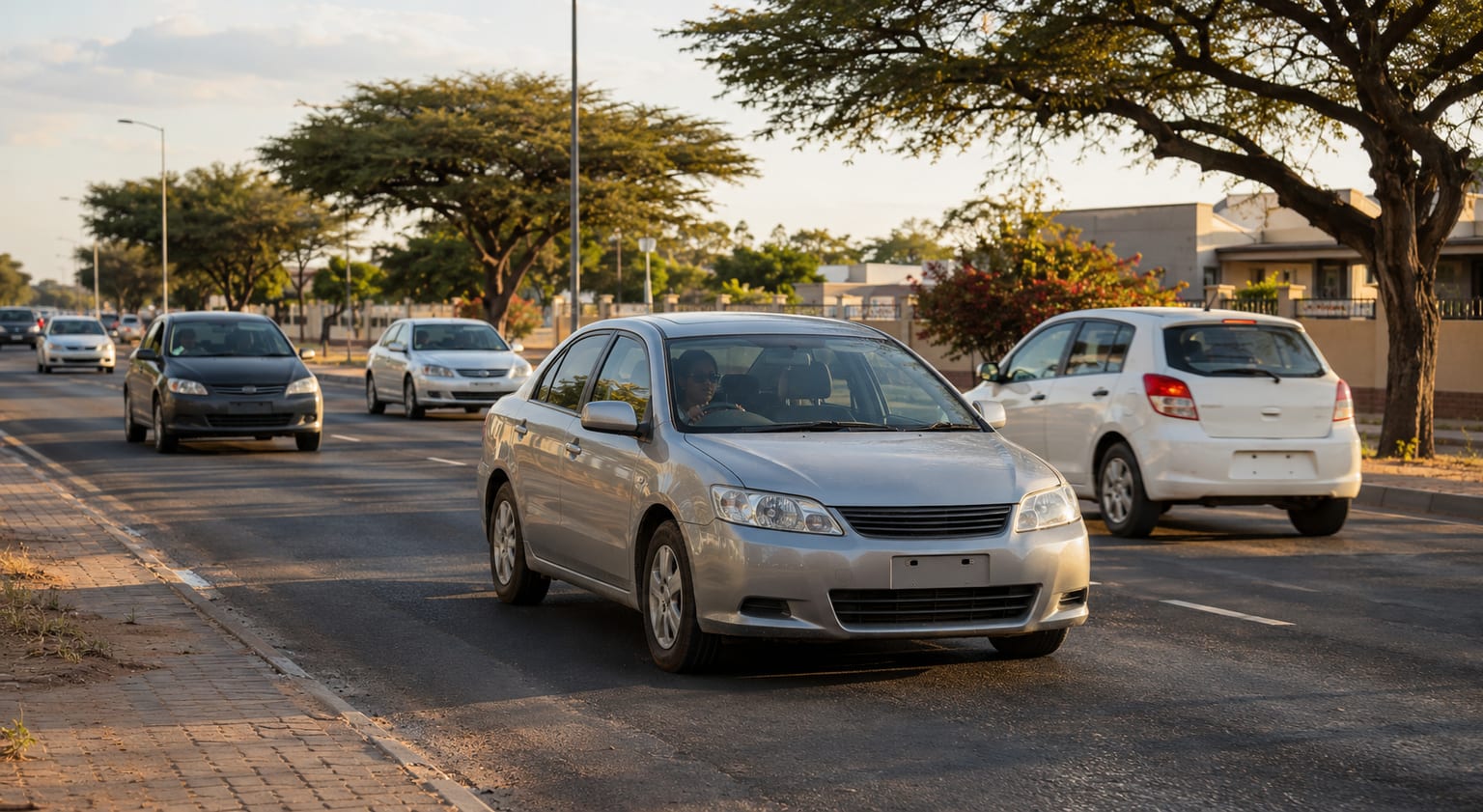 Illustration: everyday sedans and hatchbacks travelling along a tree-lined road.
That makes the figure useful for one question and useless for others. It can't tell you how many cars were imported or sold in the quarter. It can't tell you which makes are growing or shrinking in popularity with new buyers. And it says nothing about the age of the cars being renewed.
A Toyota that was registered ten years ago and renewed in Q2 2026 counts exactly once, the same as a car registered last year. Treat the share as a measure of how many are in use, nothing more.
Toyota, Mazda and Honda: what does the gap show?
The gap between first and second place is wide. Toyota's 40.6% is nearly four times Mazda's 10.6%. Put another way, for every Mazda renewed in the quarter, almost four Toyotas were renewed alongside it.
Second and third place sit close together. Mazda's 10.6% edges Honda's 10.1% by half a percentage point, so the two makes are near enough level in the licensed fleet. Both are well established on Botswana's roads, but neither comes close to Toyota's footprint.
The renewals data doesn't cover the causes behind these shares.
What does a big Toyota fleet mean if you're buying?
A large Toyota fleet tends to make ownership simpler, though this is reasoning from the figure rather than something the brief measures. When four in ten licensed vehicles share one badge, the models are familiar to most mechanics. Parts are easier to search for. The used market has plenty of comparable cars, which helps you judge a fair price.
Those are real advantages for a buyer who wants a car that's easy to run and easy to sell on. If you plan long inter-town drives and want to know a workshop in Francistown or Maun will have seen your model before, a Toyota makes a lot of sense.
The trade-offs are just as real. Popular doesn't mean cheap, and a sought-after model can hold its price. Condition and history matter far more than the badge, so a tired Toyota is still a tired car. And more choice means more to compare, which takes patience.
Buyers who want something less common, or who value a particular feature over familiarity, may find Mazda or Honda worth a look. For most people who simply want a dependable, easy-to-service car, Toyota's fleet share is a point in its favour, not the whole decision.
Browsing Toyota from Japan
Carbarn operates from Japan and ships used Japanese cars to Botswana. Each car is listed from stock in Japan, and shipping and inspection are included in the listed price. Carbarn's responsibility ends at the export port, typically Durban. Customs duty, VAT, clearance, registration and licensing are the buyer's own costs, so the listed price isn't the landed total. If Toyota's fleet share has you leaning that way, the Toyota cars for Botswana page is the place to start comparing models. The how to buy guide and the import rules and regulations page explain the process and duty.
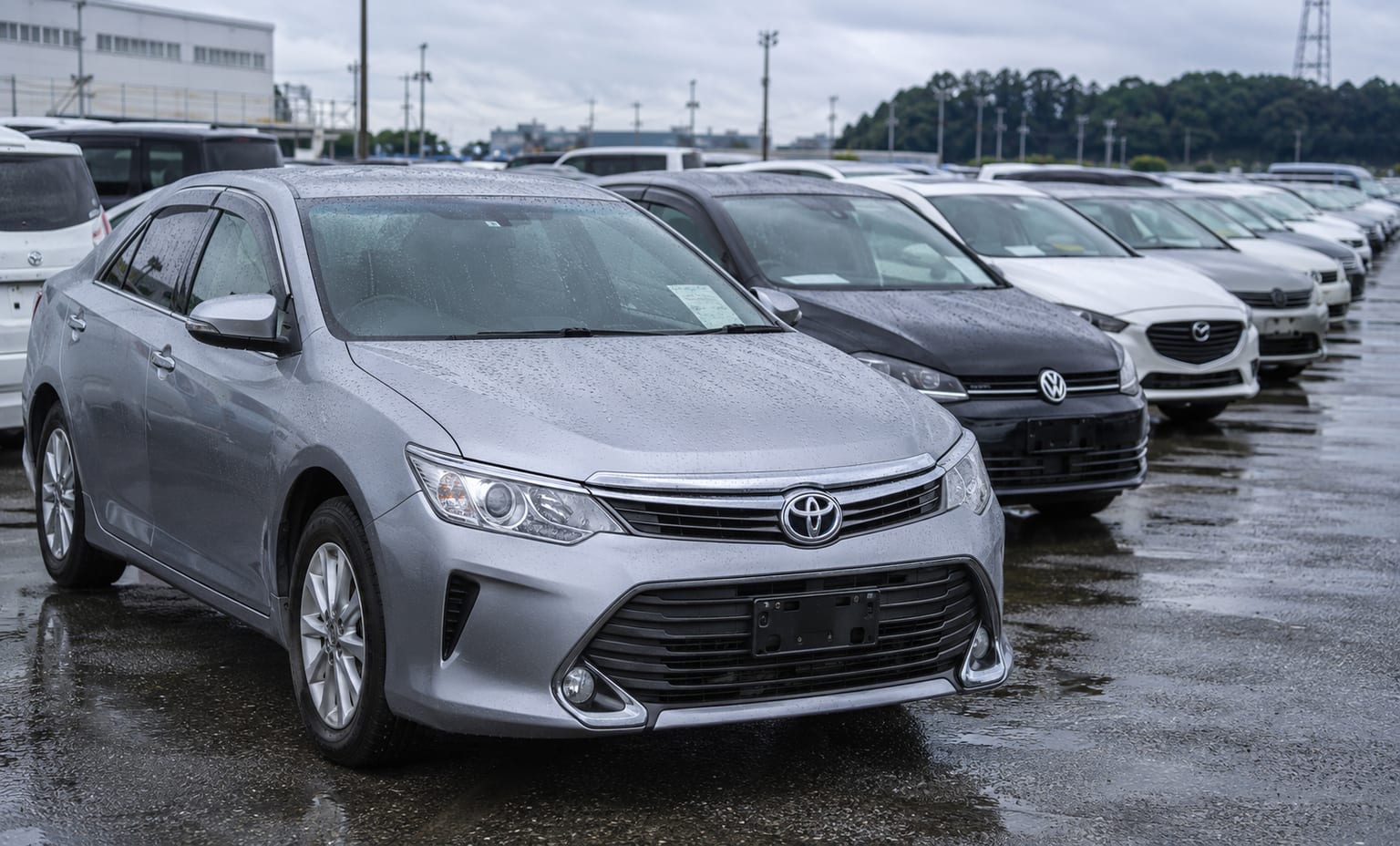 Illustration: A Toyota Camry leads rows of parked used cars on wet tarmac.
Every car is listed with two documents. An auction sheet is the official Japanese auction inspection record, which gives the car an auction grade for its condition. The second is a separate Carbarn inspection report. Reading both before you commit is the practical answer to the condition-and-history point above.