A family car needs to carry more than passengers. It may handle school bags, groceries, work equipment and luggage for a long trip to Francistown or Maun. A large SUV can do that, but its size and running costs may not suit every buyer.
The Toyota Corolla Fielder Hybrid is a five-seat Japanese-market wagon built around that practical gap. This guide looks at its official fuel figures, usable space, Botswana road suitability and the checks that matter before importing one. You can also compare the detailed Toyota Corolla Fielder specifications before choosing a year or grade.
Quick Answer
- The Fielder Hybrid suits town driving, tar roads and light gravel.
- For the later 2024–2025 NKE165G Hybrid EX, Toyota Japan’s Corolla Fielder specification information lists 27.8 km/L combined under WLTC and 24.6 km/L in WLTC city mode. The 2014 Hybrid G is listed at 33.0 km/L under the older JC08 cycle.
- Its five-seat wagon body gives families more luggage flexibility than a sedan.
- It is not designed for deep sand, severe bush tracks or seven-seat duties.
- Check the auction sheet, hybrid system, underbody, tyres and full landed cost before paying.
Is the Toyota Corolla Fielder Hybrid suitable for Botswana?
The Toyota Corolla Fielder Hybrid makes sense for buyers who want a five-seat wagon for town traffic and tar-road travel. In Toyota Japan’s 2025 Corolla Fielder specification information, the cited hybrid configuration measures 4,400 mm long with a 2,600 mm wheelbase. Those dimensions offer useful cabin space without a large-SUV footprint.
The hybrid system can be helpful around Gaborone, where stop-start traffic gives the electric motor more opportunities to assist. The wagon layout gives you more load flexibility than a typical sedan, especially when the rear seats are folded. That matters when you carry shopping, school items, tools or luggage for inter-town trips, even though seats-up boot volume is not always greater.
The trade-off is ground clearance and traction. This is a front-wheel-drive car, not a 4x4. It should suit paved roads and light gravel, but deep sand, riverbeds and rough bush tracks call for a different vehicle. Botswana has no import age limit, but older cars need more careful checks for suspension wear, battery condition, corrosion and parts availability.
| Buyer priority |
Fielder Hybrid |
Toyota Aqua |
Toyota Axio Hybrid |
| Urban parking |
Good |
Strongest |
Good |
| Family luggage |
Strongest |
More limited |
Moderate |
| Sedan preference |
No |
No |
Strongest |
| Deep sand or serious off-road use |
Poor fit |
Poor fit |
Poor fit |
| Main inspection concern |
Hybrid system, suspension and underbody |
Hybrid system and compact-car condition |
Hybrid system and sedan body condition |
The useful comparison is not wagon versus SUV in the abstract. It is space per pula versus ground clearance. If your normal roads are paved and you carry luggage often, the Fielder may provide the space you need without paying for a taller, heavier body.
How economical is the Corolla Fielder Hybrid?
The Corolla Fielder Hybrid has useful official figures, but they are comparison tools rather than promises about Botswana driving. For the later 2024–2025 NKE165G Hybrid EX, Toyota Japan’s Corolla Fielder specification information lists 27.8 km/L combined under WLTC and 24.6 km/L in WLTC city mode.
For that same 2024–2025 specification, Toyota Japan’s Corolla Fielder specification information lists 30.8 km/L for WLTC suburban driving and 27.6 km/L for WLTC motorway driving. The 2014 NKE165G Hybrid G used the older JC08 cycle and is listed at 33.0 km/L, with no WLTC result in Toyota’s catalogue. These cycles and model years are not directly interchangeable.
| Toyota test result |
Official figure |
| 2024–2025 NKE165G Hybrid EX, WLTC combined |
27.8 km/L |
| 2024–2025 NKE165G Hybrid EX, WLTC city |
24.6 km/L |
| 2024–2025 NKE165G Hybrid EX, WLTC suburban |
30.8 km/L |
| 2024–2025 NKE165G Hybrid EX, WLTC motorway |
27.6 km/L |
| 2014 NKE165G Hybrid G, JC08 |
33.0 km/L |
Actual fuel use can change with cruising speed, air-conditioning, passenger weight, tyre pressure, hills, gravel roads and battery condition. A full car travelling quickly between towns may use more fuel than the official figures suggest. Why promise one number when the route and load change every day?
The Aqua may suit a solo urban driver who values easy parking above luggage space. The Axio Hybrid makes more sense if you prefer a sedan. The Fielder is the stronger fit when five seats and a flexible rear load area matter most.
Fielder Space and Practicality
The Fielder’s main strength is its long, flexible wagon area, not an elevated driving position. In the 2021 NKE165G reference specifications, the car measures 4,400 mm long, 1,695 mm wide and 1,475 mm high, with a 2,600 mm wheelbase. The cited configuration has five seats, front-wheel drive and a CVT.
Those measurements make the Fielder easier to park than a large SUV while giving it more useful loading length than a sedan. The rear seats can fold for longer items, although the exact mechanism and equipment can vary by year and grade.
Toyota Japan’s Corolla Fielder specification information lists 413 litres with the rear seats in use and 872 litres with them folded. Toyota Global’s 2013 Corolla hybrid launch information records 407 litres with five passengers and 872 litres with two passengers. Those historical figures apply to the cited configuration, not automatically to every Fielder.
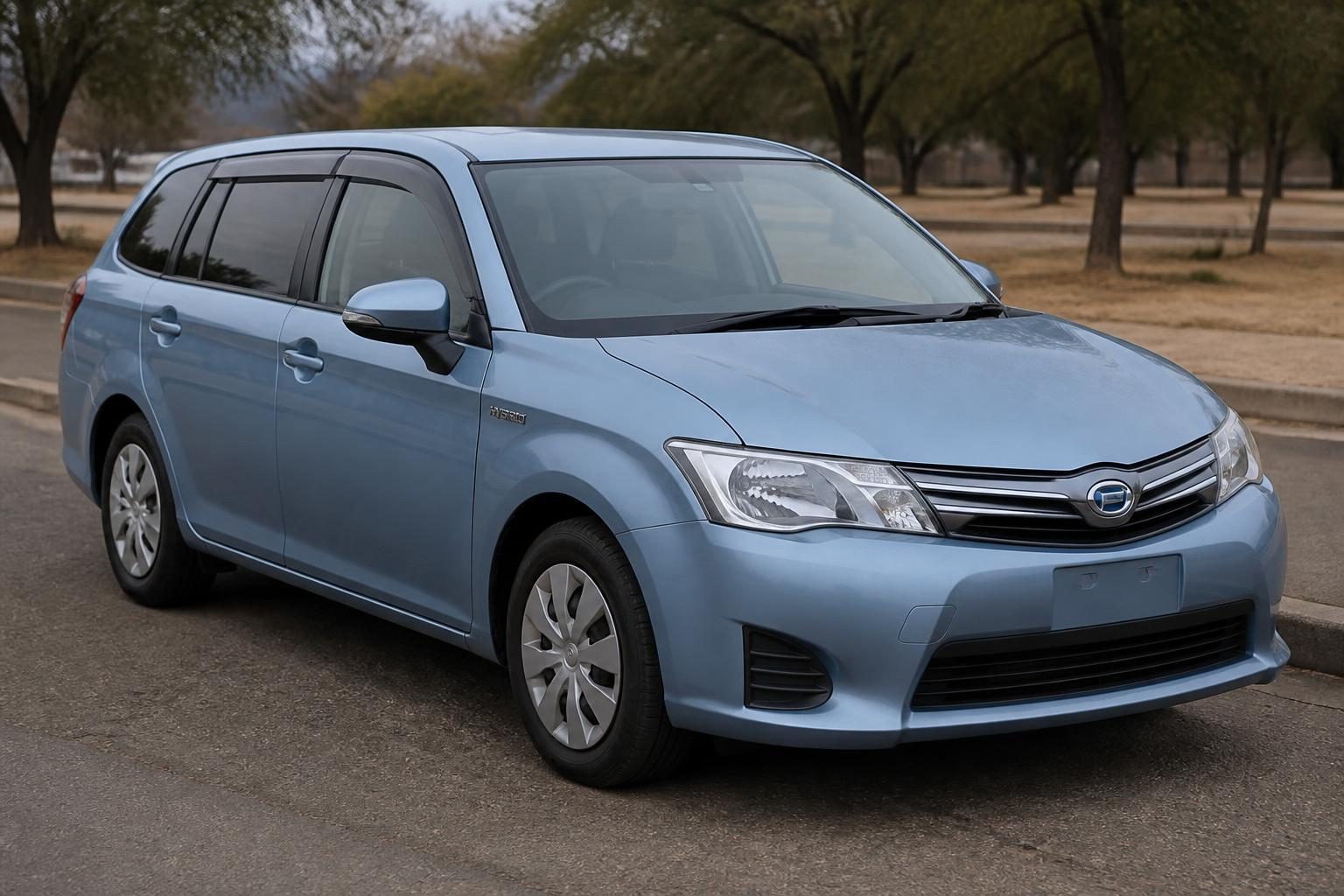 2014 Toyota Corolla Fielder Hybrid G
The 2014 Toyota Corolla Fielder Hybrid G example
The 2014 Toyota Corolla Fielder Hybrid G is a useful example of the wagon and hybrid configuration discussed here. In its 2014 vehicle record, it is listed with a 1,500 cc hybrid drivetrain, model code NKE165G, five seats, front-wheel drive, automatic transmission and a wagon body.
The same record shows 40,000 km and auction grade 3.5. Its listed dimensions are 4,360 mm long, 1,695 mm wide and 1,475 mm high, with a 2,600 mm wheelbase. The grade describes the auction assessment. It is not a mechanical guarantee, so the report and vehicle evidence still matter.
Toyota Global’s 2013 Corolla hybrid launch information identifies the NKE165G hybrid system with a 1,496 cc 1NZ-FXE engine. The engine produces 74 PS and 111 Nm, while the electric motor produces 169 Nm. Toyota gives the complete system output as 73 kW, or 100 PS, with a nickel-metal hydride battery.
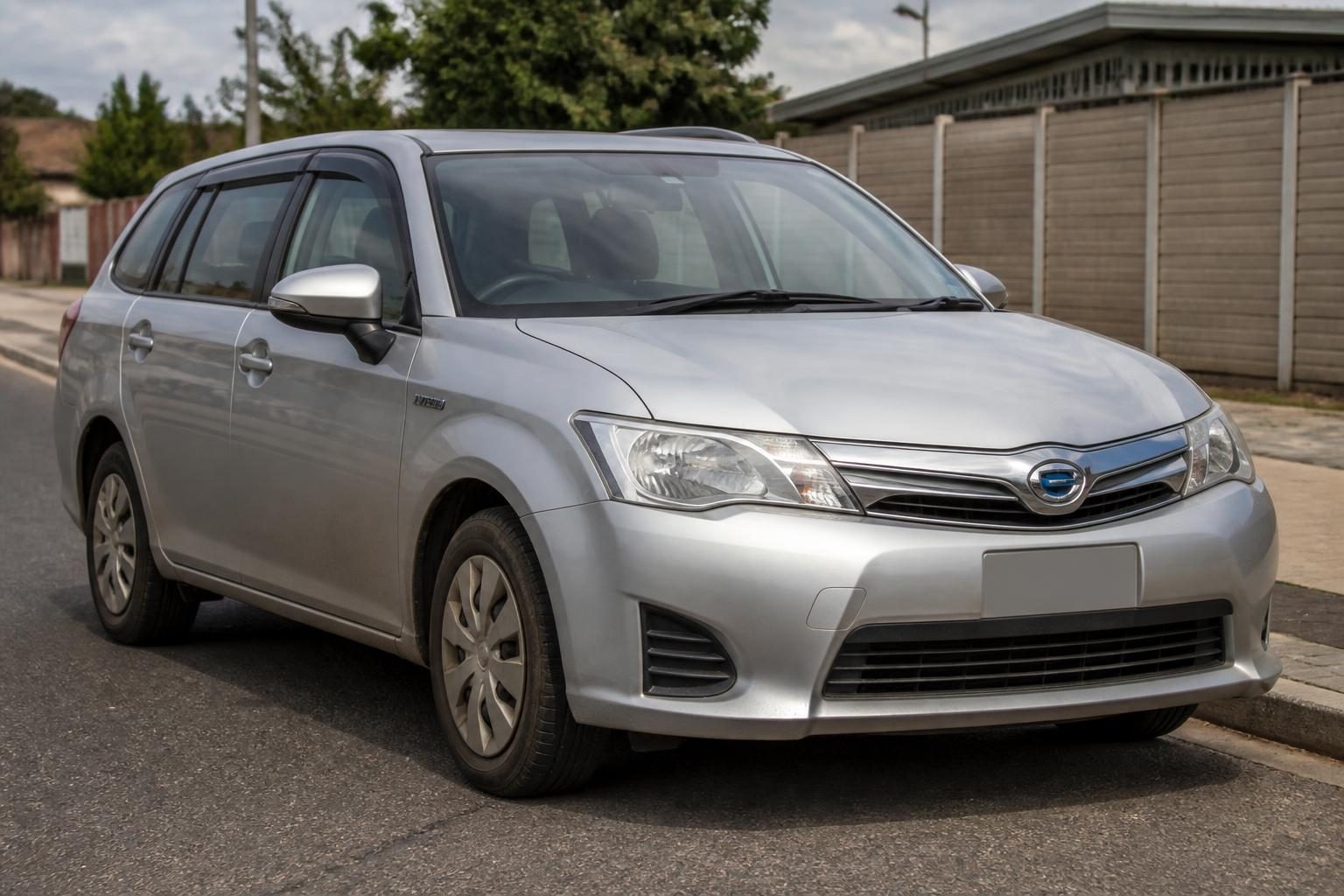 2014 Toyota Corolla Fielder Hybrid G
The 2014 age makes documentation especially important. Check that the odometer agrees with the auction sheet, inspection report and export paperwork. Do not infer equipment, colour, battery condition or safety features from the model code alone.
What should you check before buying an imported Fielder Hybrid?
Condition and documentation matter more than the Toyota badge. In its 2018 “Battery Maintenance for Hybrid and Auxiliary Batteries” article, Toyota Parts and Service explains that hybrid vehicles use both a high-voltage battery and a 12-volt auxiliary battery. Both deserve attention before purchase.
| Check |
What to look for |
Why it matters |
| Auction sheet |
Grade, mileage, damage marks and identity details |
Confirms the recorded vehicle history |
| Inspection report |
Agreement with the auction sheet |
Helps identify inconsistencies |
| Hybrid system |
Warning lights, smooth starts and normal engine cycling |
Identifies possible drivetrain faults |
| Battery ventilation |
Clean cooling intake and surrounding area |
Helps protect battery operation |
| Underbody |
Leaks, dents, rust and damaged covers |
Important for gravel-road use |
| Tyres and suspension |
Uneven wear, worn bushes and tired shocks |
Affects comfort, handling and safety |
| Air-conditioning and electrics |
Cooling, windows, locks, displays and lights |
Finds faults before payment |
Hybrid condition should be the central buying question, not an afterthought. Fuel savings can disappear if an older example needs battery work, suspension repairs, tyres or air-conditioning repairs soon after arrival.
Arrange a diagnostic scan with a technician familiar with hybrid systems where possible. Check for unusual fan noise, hesitation, warning messages or poor transitions between electric assistance and petrol power. The auction grade helps describe overall condition, but it does not replace mechanical inspection.
Import paperwork also needs planning. In 2026, the Botswana Unified Revenue Service’s “Clearance of Motor Vehicles” guidance says vehicles entering Botswana for home consumption should be cleared within 14 days. BURS lists the SAD 500, police clearances, export-country customs documents and an invoice or valuation certificate among the relevant documents.
The vehicle-and-shipping price is not the final registered cost. For the Toyota Fielder Hybrid price in Botswana, treat the figure on an individual vehicle page as one vehicle-specific landed-cost estimate, not a typical market price or a promise of the final on-road total. Auction price, freight and inspection costs vary between vehicles.
Customs duty, VAT, clearance, registration and licensing remain separate considerations. Carbarn’s current estimate uses approximately 27% customs duty for some imports, but Botswana customs duty depends on the vehicle’s tariff classification and current assessment. Confirm the final duty, VAT and levies with BURS or a registered clearing agent. Never assume a quoted price is your total on-road cost.
Before initial registration, check the current roadworthiness requirement and any age threshold directly with the Botswana registration authority, because the rule can change. Read the current Botswana import rules and required documents and confirm the process with BURS or a registered clearing agent before committing to a vehicle.
Is the Corolla Fielder Hybrid the right fit for you?
The Fielder’s 2,600 mm wheelbase and five-seat layout make it a practical family car, while Toyota’s 2025 sheet records 872 litres with the rear seats folded. Those figures support its strongest use case: carrying people and luggage on ordinary roads, without moving into a larger SUV.
It is a strong option if you drive around Gaborone, make regular tar-road trips or carry light equipment for work. The lower driving position also suits buyers who prefer car-like handling and easier parking.
Consider another vehicle if you regularly cross deep sand, tackle severe bush tracks or need seven seats. You should also look elsewhere if you want a simple petrol drivetrain with no hybrid battery system to assess.
The honest verdict is simple. The Fielder Hybrid is worth considering when fuel economy, five-seat practicality and luggage space matter more than ground clearance. It is not the right tool for serious off-road use.
How does the Japan-to-Botswana buying process work?
In 2026, BURS’s “Clearance of Motor Vehicles” guidance says home-consumption vehicles should be cleared within 14 days of entering Botswana. Planning documents before the ship arrives helps separate the Japan purchase, port movement, customs clearance and registration stages.
The usual route is Japan to Durban by RoRo ship, followed by overland movement into Botswana. Walvis Bay is an alternative port. Carbarn’s import-rules page gives an estimate of about 24 to 34 days, while its terms describe 6 to 8 weeks from confirmation of full payment. Treat both as indicative, and confirm the route, timing and clearance arrangements for the individual shipment.
Before paying, open the individual vehicle page and review its estimated landed-cost panel. Confirm what the quote covers, then budget separately for customs duty, VAT, clearance, registration, licensing, bank charges and exchange-rate movements.
Carbarn Botswana is not a legal entity in Botswana; it operates internationally from Japan under Carbarn, a Carbarn LLC service. Carbarn says its listed vehicles come with an official Japanese auction sheet and an in-house inspection report. The stated all-inclusive price covers the vehicle, shipping and inspection, while full payment is required before shipment. Buyers receive invoice, bill of lading, inspection documents and live vessel tracking through the dashboard. Support runs through Japan, and responsibility ends at the designated export port, typically Durban. Delivery inside Botswana is not promised.